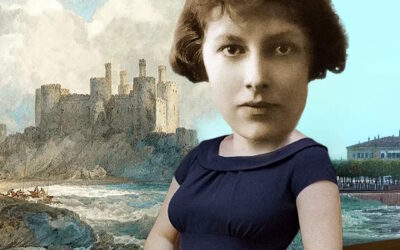
Often called the “Female Beethoven,” Emilie Luise Frederica Mayer composed eight symphonies and numerous chamber works, piano sonatas, and orchestral overtures.
Works
Children’s Corner
Debussy composed Children’s Corner between 1906 and 1908. He dedicated the suite to his daughter, Claude-Emma. The dedication reads: “To my dear little Chouchou, with tender apologies from her father for what follows.”
African Suite
Coleridge-Taylor sought to draw from traditional African music and integrate it into the classical tradition, which he considered Johannes Brahms to have done with Hungarian music and Antonín Dvořák with Bohemian music.
Overture to “The Wasps”
Composed by Ralph Vaughan Williams in 1909, originally part of a suite of incidental music for a 1909 Cambridge production of Aristophanes’ classical Greek comedy “The Wasps,” a satire of the Athenian legal system.
Symphony No. 99
Josef Haydn, “Father of the Symphony” composed this symphony in Vienna in for his return to London, and conducted the first performance at the King’s Theatre on February 19, 1794.
Violin Concerto
A child prodigy, Korngold became one of the most important and influential composers in Hollywood history. He wrote scores for such celebrated films as “The Adventures of Robin Hood,” “Captain Blood,” Elizabeth and Essex,” “The Sea Hawk,” “Green Pastures,” and many others, winning two Oscars for film scoring. Through his film scores, Korngold created the “Hollywood style” of film music, which still influences film composers up to the present day.
Lyric for Strings
Originally titled Lament, the Lyric for Strings was first composed as the second movement of Walker’s String Quartet No. 1 in 1946 while he was a graduate student at the Curtis Institute of Music.
Double Bass Concerto
Before becoming music director of the Boston Symphony Orchestra in 1924, Serge Koussevitzky was a celebrated Russian double-bass virtuoso and champion of the instrument.
Passacaglia & Fugue in C Minor
One of his most important and well-known works, and an important influence on 19th- and 20th-century passacaglias. Stokowski arranged this work in 1922, and recorded it six times.
Rosa de Sal
Indian-American composer Reena Esmail (b. 1983) originally wrote Rosa De Sal for soprano and piano, using text from Chilean poet-diplomat Pablo Neurda’s Sonnet XVII. Esmail is known for interweaving raag with traditional Western orchestral colors.