The Concierto received its first performance at the Royal Festival Hall, London, on April 15, 1982. The performers were the British cellist Julian Lloyd Webber, who had commissioned the concerto, and the London Philharmonic Orchestra conducted by Jesús López-Cobos.
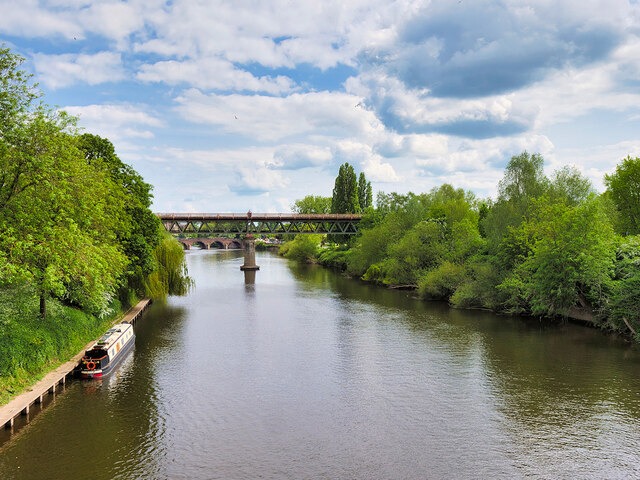
Together with Summer Night on the River it is one of Delius’s Two Pieces for Small Orchestra. The two were first performed in Leipzig on 23 October 1913.
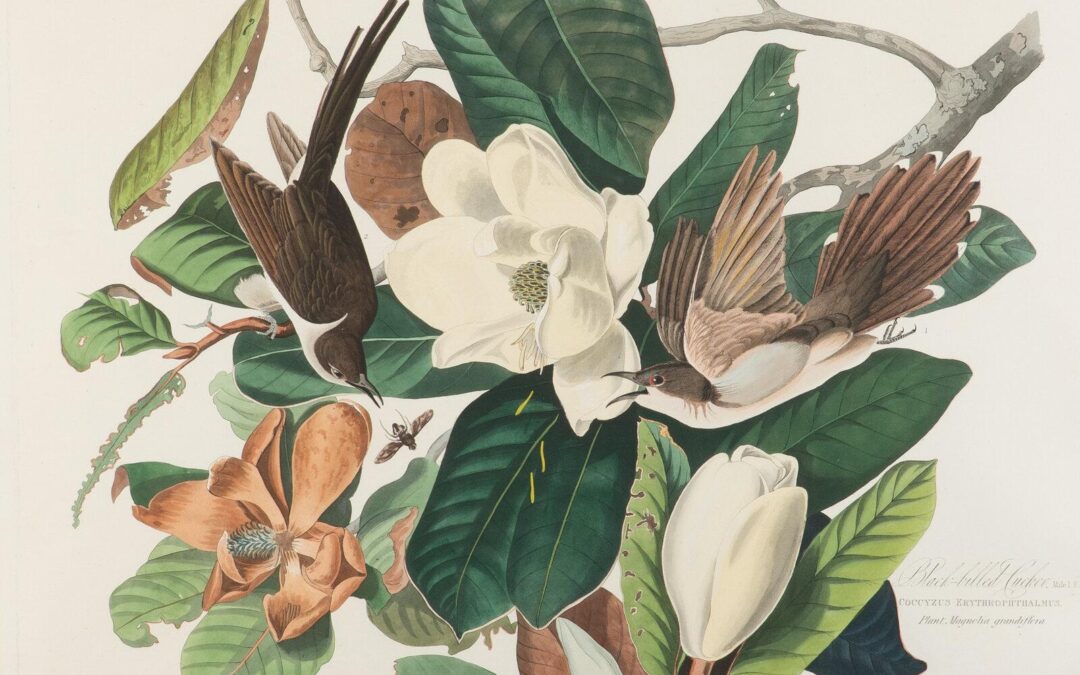
Together with On Hearing the First Cuckoo of Spring it is one of Delius’s Two Pieces for Small Orchestra. The two were first performed in Leipzig on 23 October 1913.
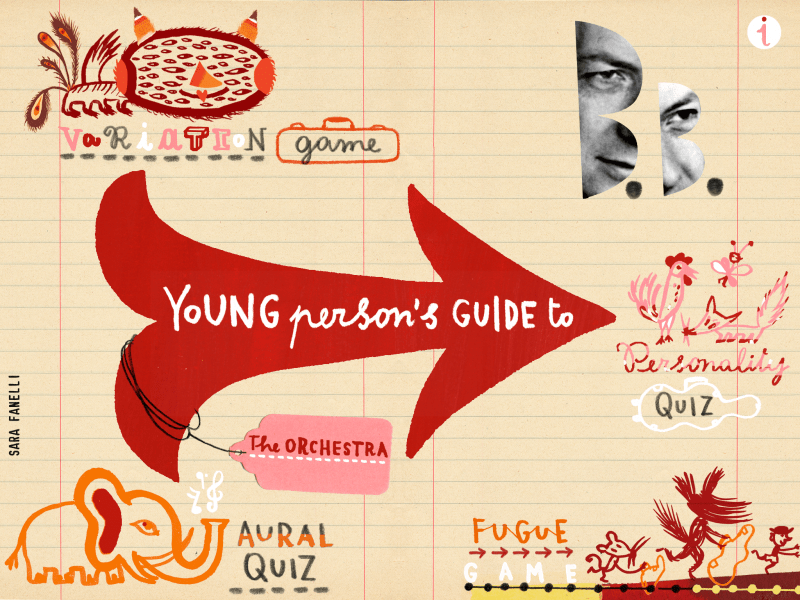
A 1945 musical composition by Benjamin Britten with a subtitle “Variations and Fugue on a Theme of Purcell.” It is based on the second movement of Purcell’s Abdelazer suite (performed by The Broadway Bach Ensemble in February, 2017).
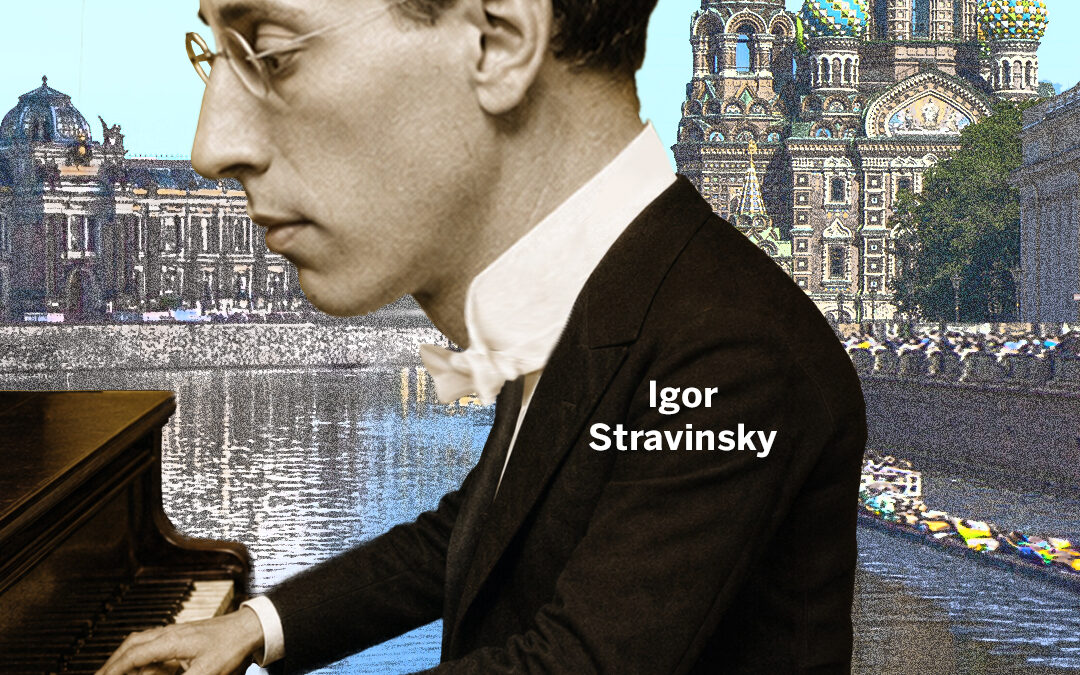
In 1910, the Russian impresario Serge Diaghilev and his choreographer Michel Fokine took a chance on 27-year-old Igor Stravinsky to compose music for their dazzling ballet, The Firebird. The story (a conglomeration of several Russian folktales) tells of the downfall of evil Kastchei the Deathless, who seizes young princesses as captives while turning the knights who arrive to rescue them into stone. The hero Crown Prince Ivan recruits the Firebird, named for her beautiful feathers that flicker like flames, to help destroy Kastchei and free his victims.
The Firebird is pure sonic magic. The suite opens with a low, mysterious Introduction that creeps into the dazzling, fluttering woodwinds of the Dance of the Firebird. A tender, lyrical oboe melody centers the Round Dance of the Princesses, lulling the audience into safety before the orchestra erupts into the mayhem of the Infernal Dance of King Kashchei, complete with barbaric snorts and growls from the brass. In true fairy-tale fashion, order is restored through a hypnotic bassoon solo in the Berceuse (Lullaby), which leads directly into the Finale — a triumphant, brass-led celebration built on a traditional Russian folk song (in mixed-meter!) Perceptive audiences might hear that Stravinsky uses typical harmonies for music of the mere mortals, while the supernatural creatures use extended orchestral techniques, octatonic scales, and complex rhythms.
The lavish Firebird premiere was a huge success in every respect. The dancers, costumes, choreography, stage sets, and music dazzled Parisian audiences and critics alike. The 1919 Suite is a reduction of the 45-minute ballet both in length and instrumentation, tightening up the story into six movements, and is the most popular version performed today.
The Firebird is the birth of musical modernism. Without it, there would be neither Petrushka nor The Rite of Spring. Stravinsky remains deeply rooted in traditions of his teacher, Rimsky-Korsakov (the orchestral richness, the parallel octaves, the chromatic sensuality), but he is already breaking new ground. The “Infernal Dance” anticipates the primal rhythms of “The Rite of Spring,” while the static harmonies of the “Round Dance” hint at the neoclassicism of his later years. It’s a brilliant evolutionary leap: the last great “Russian” ballet and, at the same time, the first “modern” one.
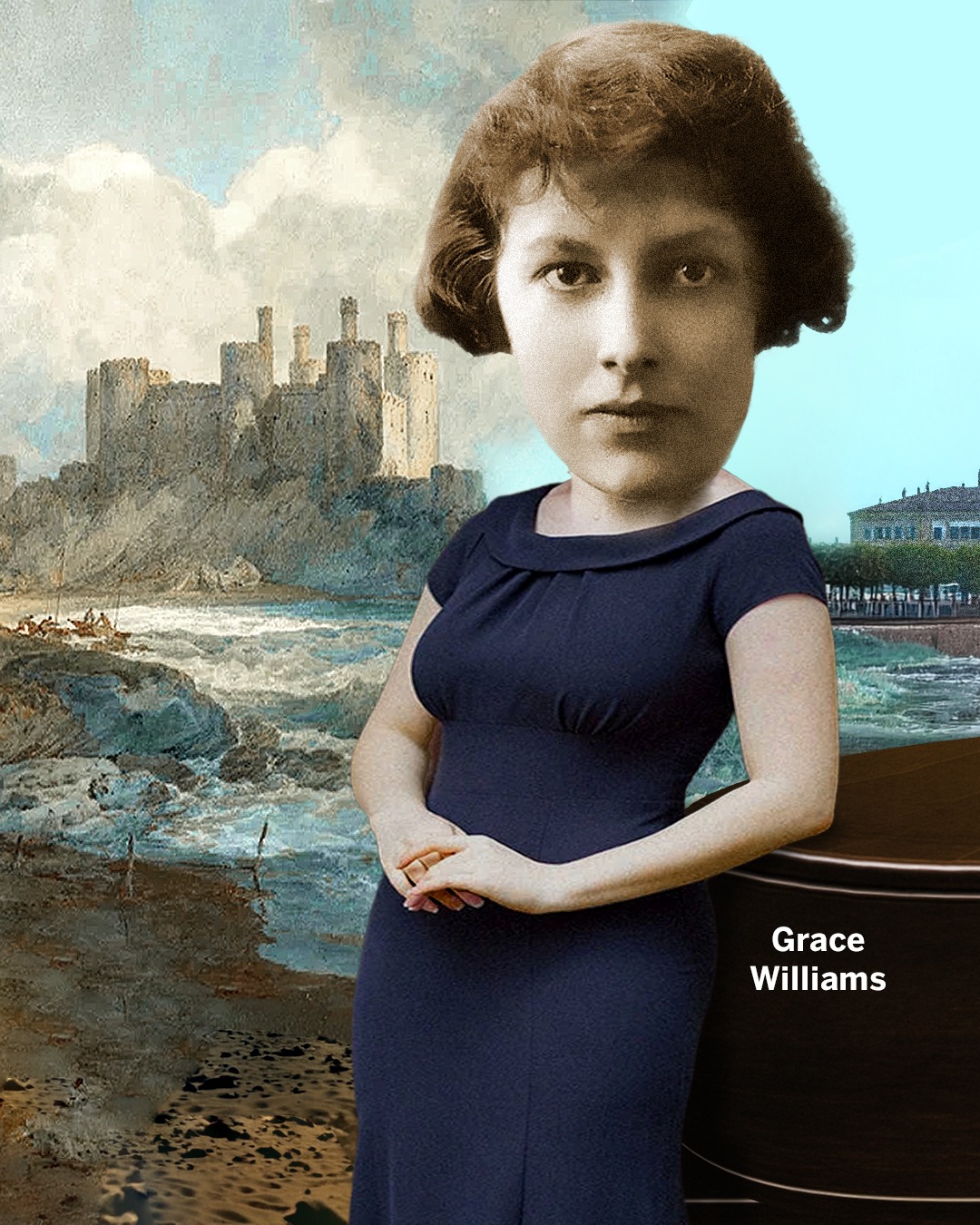
Grace Williams (1906 – 1977) wrote Fantasia on Welsh Nursery Tunes in 1940. She has been recognized as Wales’ most prominent female composer. Williams studied at the Royal Conservatory in London with Gordon Jacob and Ralph Vaughan Williams. Her compositions include symphonies, concertos, choral and vocal works, chamber works and solo pieces. She was also the first British composer to score a feature film.
In one eleven-minute movement, Fantasia transforms eight Welsh nursery tunes and lullabies, well-known to Welsh families but practically unknown outside Wales. It begins and ends with Jim Cro – also known as Dacw Mam yn Dwâd (Here’s mummy coming), which bears a striking resemblance to the American tune “Yankee Doodle.” It is bookended with the most lively tunes, and develops more melancholic tunes in the middle. Fantasia is cleverly constructed, highlighting the many colors of the orchestra while still remaining whimsical and light. The percussion evokes childhood instruments, while the harp adds strong Celtic tones. The work especially features our trumpet section.
Fantasia received its premiere in 1940 on a radio broadcast by the BBC Northern Orchestra (now the BBC Philharmonic Orchestra). It was a great hit, prompting an immediate commercial recording by the London Symphony Orchestra. Its popularity, especially in war-torn Wales, helped Williams to become more widely known, and it is still her most popular work and an important part of her output.
Williams said of the piece, “I can give something of myself to folksong fantasias + such things – yes I know they are derivative but they’ve got a splash of me in – because I really + truly love those traditional tunes.”
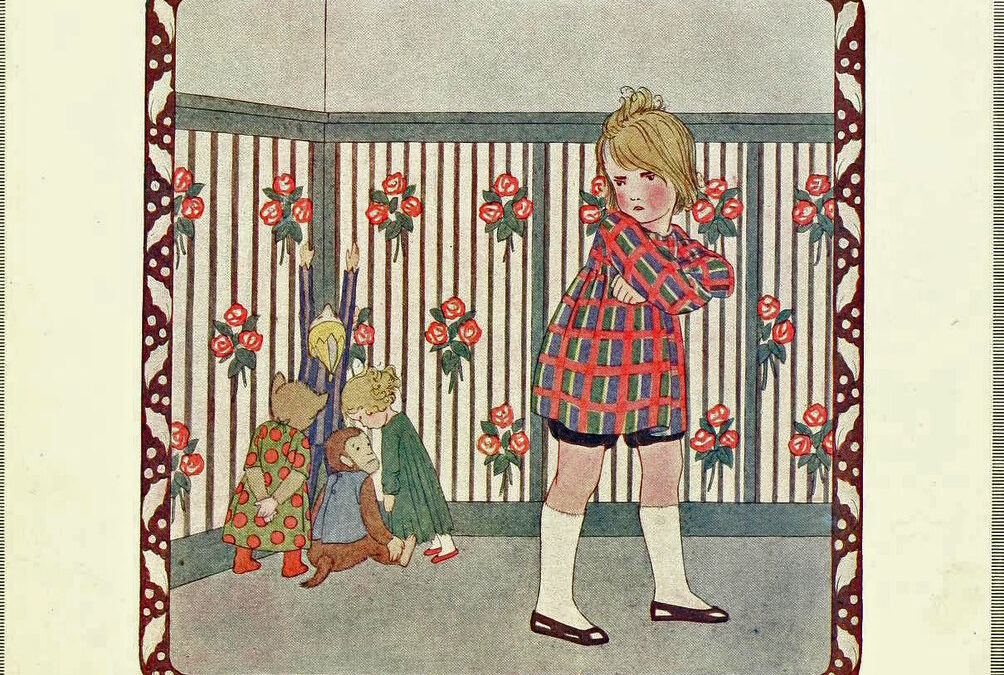
Claude Debussy composed the Children’s Corner suite between 1906 and 1908. He dedicated the suite to his daughter, Claude-Emma (known as “Chou-Chou”), who was born on October 30, 1905, in Paris. She is described as a lively and friendly child who was adored by her father.
She was three years old when he dedicated the suite to her in 1908. The dedication reads: “A ma chère petite Chouchou, avec les tendres excuses de son Père pour ce qui va suivre. C. D.” (To my dear little Chouchou, with tender apologies from her father for what follows).
Claude-Emma died in 1919 at only 13 years old, just a year after her father. The suite was published by Durand in 1908, and was given its world premiere in Paris by Harold Bauer on December 18 of that year. In 1911, an orchestration of the work by Debussy’s friend André Caplet received its premiere. The suite is in six movements, each with an English-language title.
Doctor Gradus ad Parnassum is a knowing reference used for many centuries for instructional books and music, literally translated as “steps to Parnassus.” It nods to the tedium of scale practice, transforming the mundane to his characteristic washes of sound and grand gestures.
In Jimbo’s Lullaby, a child’s stuffed elephant is lovingly brought to life, presumably mis-named after P. T. Barnum’s magnificent mammal Jumbo. The opening melody lumbers in the lower basses, representing our happy elephant.
Serenade for the Doll depicts the conversations of a Chinese porcelain doll, and of course, what musical element is more appropriate (clichéd?) than to use the five-note musical scale and frequent intervals of a fourth?
In The Snow Is Dancing, Debussy paints an icy landscape with shivering strings and floating winds.
Classical music fans will hear nods to Debussy’s Afternoon of a Faun in The Little Shepherd, with an oboe leading the pastoral descent.
Golliwogg’s Cakewalk is the most famous and lively of the movements, and is emblematic of French society’s enthrallment with the new sound of jazz, which was emerging in the United States at that time. The cakewalk was a dance that was a mainstay of American minstrel shows, and characterized by syncopations and vigorous, strutting rhythm. “Golliwogg” was a black, stuffed doll, dressed in stereotypical minstrel show garb, and completely en vogue at the time; Chouchou may have owned one.
Debussy’s nod to jazz bookends a satirical reference to Wagner’s Prelude to Tristan und Isolde, barely masking the composer’s contempt for the German master.
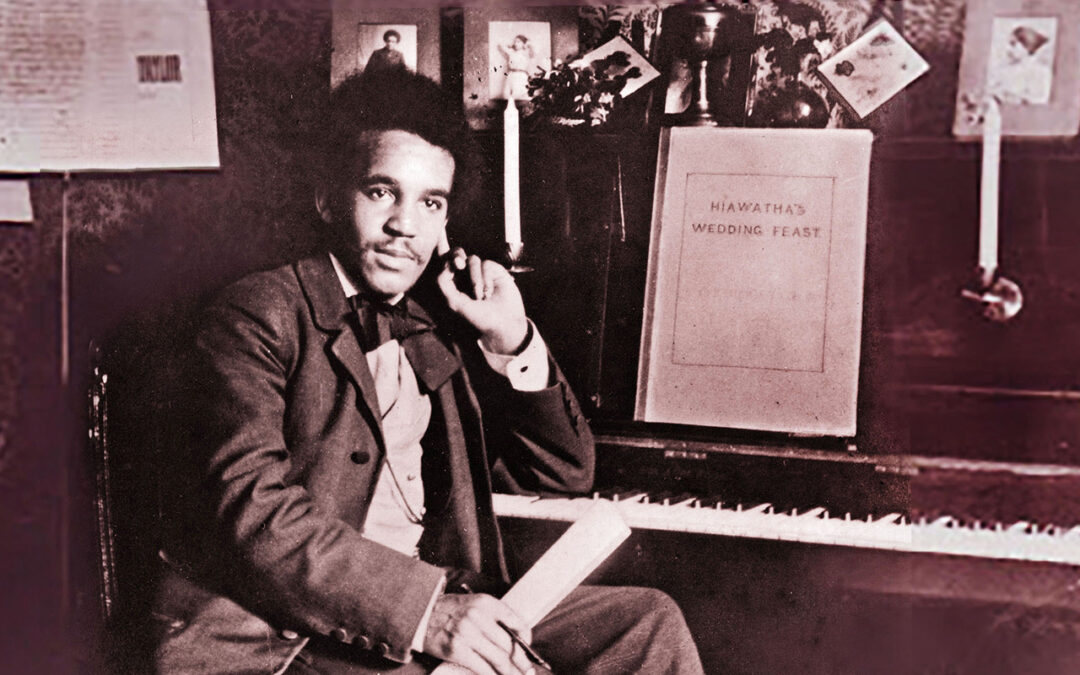
Samuel Coleridge-Taylor (15 August 1875 – 1 September 1912) was a well-known British composer at the turn of the last century. The son of an Englishwoman and a father from Sierra Leone, he started violin lessons at age five, and quickly established himself as a composer and conductor.
He was particularly known for his three cantatas on the epic 1855 poem The Song of Hiawatha by the American poet Henry Wadsworth Longfellow.
In 1898 Coleridge-Taylor composed the “African Suite” for solo piano after meeting with the African-American poet Paul Dunbar, who encouraged him to explore his African heritage. Coleridge-Taylor arranged the last movement (“Danse Nègre”) for full orchestra, and it has since become a well-known showpiece. It features lively dance rhythms framed in a Victorian musical idiom, with contrasting lyrical sections featuring a late-romantic sensibility.
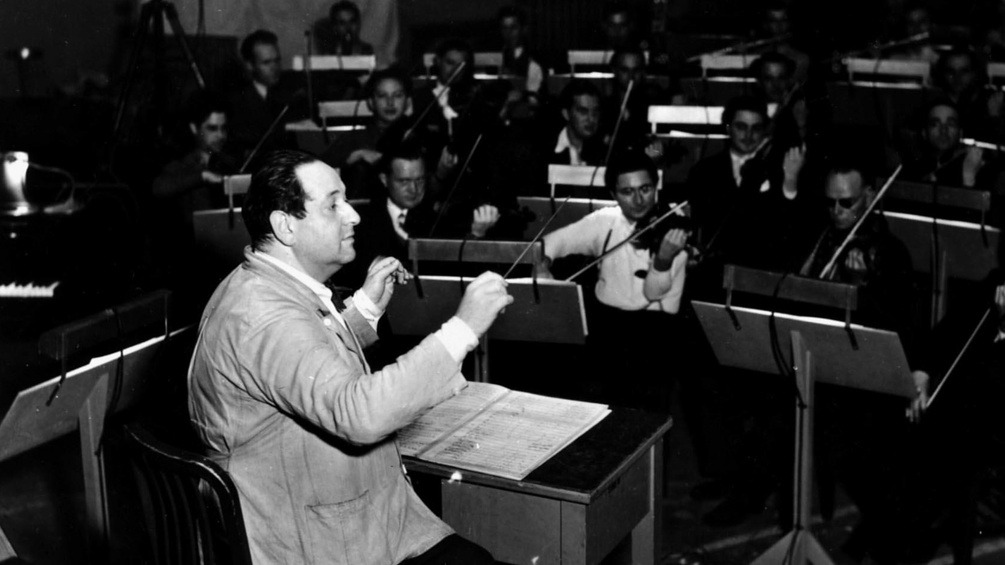
Erich Wolfgang Korngold was the son of Julius Korngold, the most influential music critic in early 20th-century Vienna. His parents, who came from a bourgeois Jewish background, gave their son his middle name in honor of Wolfgang Amadeus Mozart. He grew up in turn-of-the-century Vienna, a world capital of music – the city of Brahms, Strauss and Mahler. Korngold was regarded as one of the most avant-garde Viennese composers of his day. A musical prodigy, he started composing at the age of six. When he was 10, his father took him to meet the great Gustav Mahler, who pronounced him “a genius.” His works, including piano pieces, a piano trio, and a ballet-pantomime, started being published in his early teens. Numerous other compositions followed, including operas (such as “Die tote Stadt”), piano sonatas, chamber music, songs, and other stage works.
He thrived up until the mid-1930s, when the threat of Hitler and Nazi Germany started to loom large. In 1934, Korngold was asked by Max Reinhardt, a prominent director with whom Korngold had collaborated in Europe, to travel to Hollywood to work on scoring music for motion pictures. His first film score in 1934 was for a film version of Shakespeare’s “Midsummer Night’s Dream,” and was a success. Despite that, Korngold was not comfortable in Hollywood and went back to Vienna in 1937. As the Nazi threat to Austria loomed, Korngold fortunately was offered another Hollywood contract to score films and took it, leaving Vienna in early 1938 right before the Nazi takeover of Austria.
Once in Hollywood Korngold became the most celebrated film composer of cinema’s “golden age.” Drawing on his musical background in concert music, opera and operetta, he wrote scores for such celebrated films as “The Adventures of Robin Hood,” “Captain Blood,” Elizabeth and Essex,” “The Sea Hawk,” “Green Pastures,” and many others, winning two Oscars for film scoring. Through his film scores, Korngold created the “Hollywood style” of film music, which still influences film composers up to the present day.
During World War II, Korngold focused exclusively on his film scores. After 1945, he began once again to compose classical pieces – among them two concertos, a symphony and a string quartet. His violin concerto – with its soaring lyricism, virtuosic demands, and cinematic drama – quickly became a favorite of the solo violin repertoire. It was premiered by Jascha Heifetz in 1947 and was an artistic triumph, quickly becoming a staple of the violin concerto literature. Its style is hyper late-romantic, with Korngold’s lush tonal colors and typical instrumentation featuring vibraphone, harp, celesta, glockenspiel and bells.
The concerto is in three movements, each of which is based on themes taken from his 1930s film scores. The Moderato nobile is in a traditional format (exposition, second theme, development, recapitulation, and coda). Its opening soaring theme (in fourths and fifths) is taken from his film “Another Dawn.” Its second lyrical theme comes from “Juarez.” The meditative Romance is a prolonged meditation on a love theme (”Anthony Adverse”), and features a “mysterioso” section in the middle which pushes harmonic boundaries. The Finale is based on themes from “The Prince and the Pauper,” featuring a rollicking initial motif introduced by the soloist, and a dramatic second-theme climax leading to a triumphant ending.
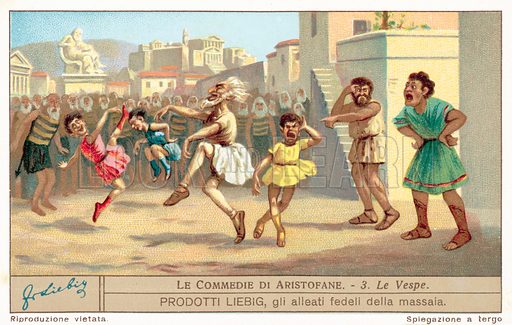
Vaughan-Williams composed this overture as part of a suite of incidental music for a 1909 Cambridge production of Aristophanes’ classical Greek comedy “The Wasps,” a satire of the Athenian legal system.
The overture opens with a loud humming noise, suggesting the incessant “buzzing” of wasps (symbolizing the Athenian jurymen costumed as wasps in the play). Vaughan-Williams then transitions to several typically English folk melodies, starting with the woodwinds and being taken up by the entire orchestra. He expands these melodies in style and meter. The middle section of the overture transitions to a French-impressionist style, no doubt influenced by Vaughan-Williams’ studies with Maurice Ravel in 1908. A main-theme recap (both the “buzzing” and initial folk-song melody) leads to a glorious combination of all themes played against each other at the same time. a hallmark of Vaughan-Williams’ orchestral style.
While originally part of his larger theatrical score, “The Wasps” overture stands effectively on its own in the concert hall, and remains one of Vaughan-Williams’s most frequently performed short orchestral works.