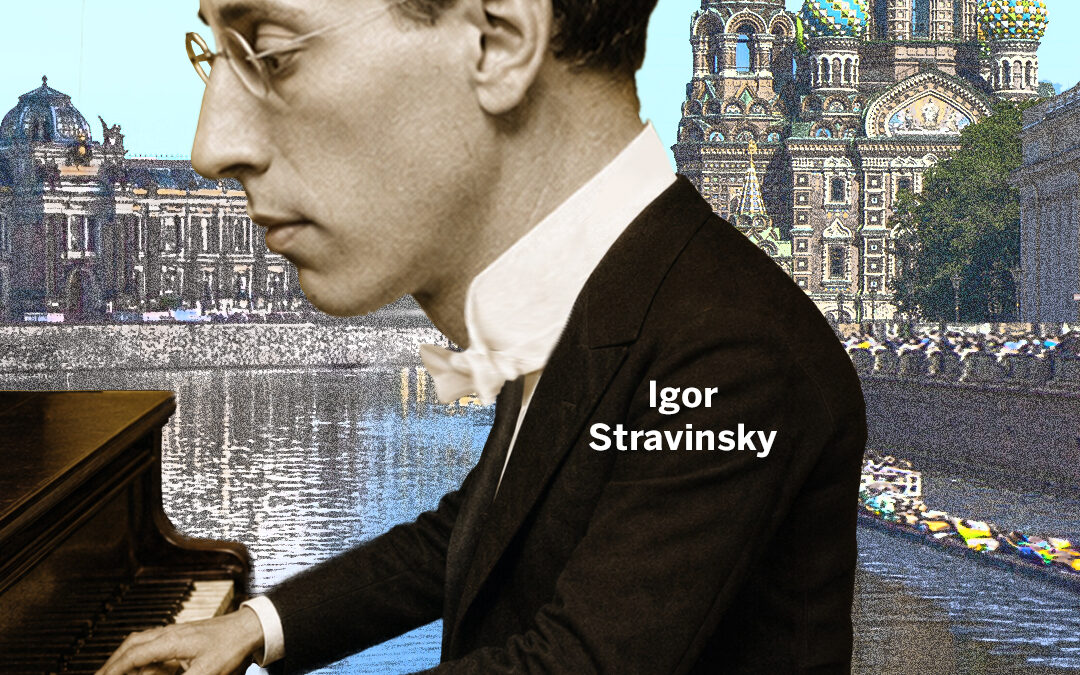
In 1910, the Russian impresario Serge Diaghilev and his choreographer Michel Fokine took a chance on 27-year-old Igor Stravinsky to compose music for their dazzling ballet, The Firebird. The story (a conglomeration of several Russian folktales) tells of the downfall of evil Kastchei the Deathless, who seizes young princesses as captives while turning the knights who arrive to rescue them into stone. The hero Crown Prince Ivan recruits the Firebird, named for her beautiful feathers that flicker like flames, to help destroy Kastchei and free his victims.
The Firebird is pure sonic magic. The suite opens with a low, mysterious Introduction that creeps into the dazzling, fluttering woodwinds of the Dance of the Firebird. A tender, lyrical oboe melody centers the Round Dance of the Princesses, lulling the audience into safety before the orchestra erupts into the mayhem of the Infernal Dance of King Kashchei, complete with barbaric snorts and growls from the brass. In true fairy-tale fashion, order is restored through a hypnotic bassoon solo in the Berceuse (Lullaby), which leads directly into the Finale — a triumphant, brass-led celebration built on a traditional Russian folk song (in mixed-meter!) Perceptive audiences might hear that Stravinsky uses typical harmonies for music of the mere mortals, while the supernatural creatures use extended orchestral techniques, octatonic scales, and complex rhythms.
The lavish Firebird premiere was a huge success in every respect. The dancers, costumes, choreography, stage sets, and music dazzled Parisian audiences and critics alike. The 1919 Suite is a reduction of the 45-minute ballet both in length and instrumentation, tightening up the story into six movements, and is the most popular version performed today.
The Firebird is the birth of musical modernism. Without it, there would be neither Petrushka nor The Rite of Spring. Stravinsky remains deeply rooted in traditions of his teacher, Rimsky-Korsakov (the orchestral richness, the parallel octaves, the chromatic sensuality), but he is already breaking new ground. The “Infernal Dance” anticipates the primal rhythms of “The Rite of Spring,” while the static harmonies of the “Round Dance” hint at the neoclassicism of his later years. It’s a brilliant evolutionary leap: the last great “Russian” ballet and, at the same time, the first “modern” one.
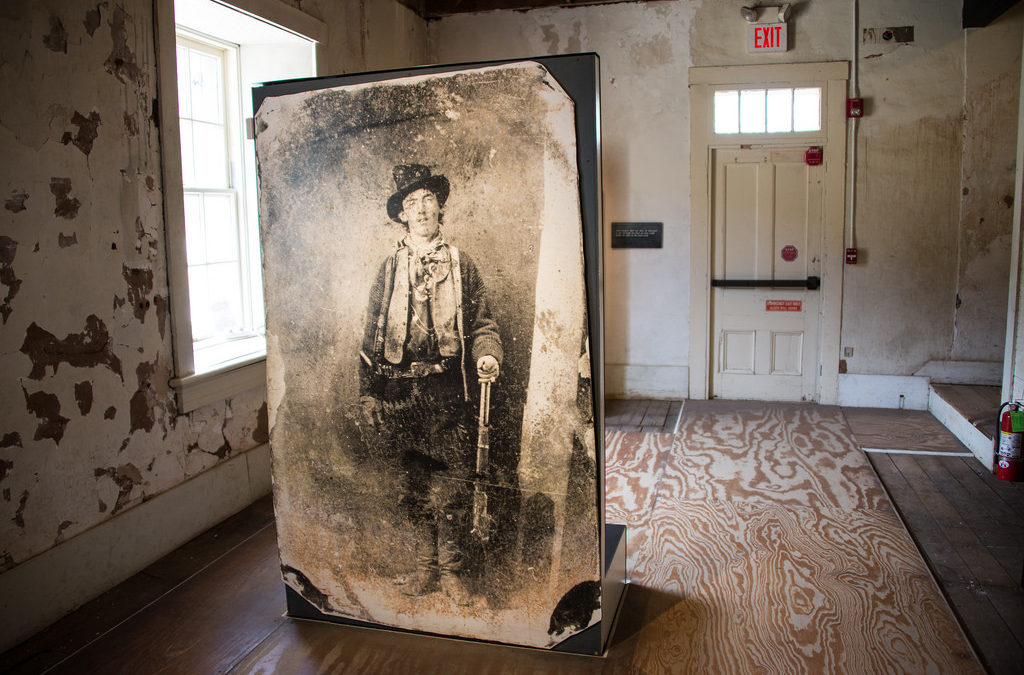
This Suite is taken from the ballet Billy the Kid written for the American Ballet Caravan at the suggestion of its director Lincoln Kirstein and based on a story by Eugene Loring. The following is a quotation from an article by Aaron Copland, Notes on a Cowboy Ballet.
The ballet begins and ends on the open prairie. The first scene is a street in a frontier town. Cowboys saunter into town, some on horseback, others on foot with their lassos; some Mexican women do a jarabe, which is interrupted by a fight between two drunks. Attracted by the gathering crowd, Billy is seen for the first time, a boy of twelve, with his mother. The brawl turns ugly, guns are drawn, and in some unaccountable way, Billy’s mother is killed. Without an instant’s hesitation, in cold fury, Billy draws a knife from a cowhand’s sheath and stabs his mother’s slayers. His short but famous career has begun. In swift succession we see episodes in Billy’s later life—at night, under the stars, in a quiet card game with his outlaw friends, hunted by a posse led by his former friend Pat Garrett, in a gun battle. A drunken celebration takes place when he is captured. Billy makes one of his legendary escapes from prison. Tired and worn out in the desert, Billy rests with his girl. Finally the posse catches up with him.
Composed in 1923, “La Création” is a fusion of jazz, blues and orchestral styles. Milhaud discovered jazz music while on a 1921 trip to London, and was enthralled by the new idiom. He traveled to the U.S. in 1922 on a concert and conducting tour, performing in various American cities. During his stays in New York he made it a point to frequent black jazz clubs in Harlem, and steeped himself in the music, its instrumentation and style.
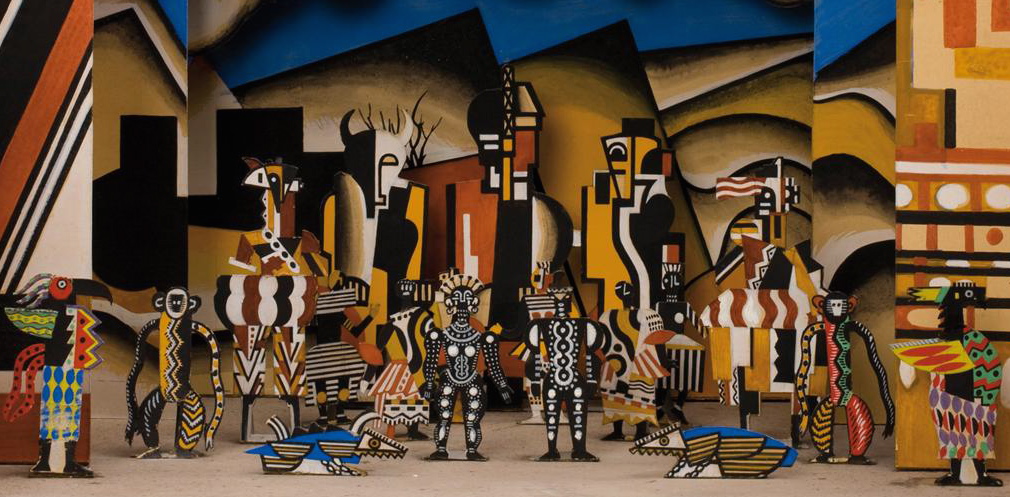
Returning to Paris, he teamed up with the Ballet Suédois, the author Blaise Cendrars and the cubist artist Fernand Léger to compose music for an African-themed ballet of creation. While the ballet itself is rarely performed today, Milhaud’s scintillating score has become part of the concert repertoire.
Its 18-piece instrumental ensemble is unique: woodwinds (flutes, clarinets, oboe, bassoon, saxophone); brass (horn, trumpets, trombone); four solo strings (two violins, ‘cello, bass); piano; and percussion (five timpani, plus a large variety of percussion instruments).
“La Création” has six movements, played without a break. Jazz riffs, blues and syncopated rhythms abound.
The Overture starts with a sonorous melody played by the saxophone.
“Chaos” features a jazz fugue, starting with bass, trombone, saxophone and trumpet.
“Creation of Plants and Animals” begins with a somber woodwind motif signifying darkness; an oboe blues riff signals the birth of flora and fauna.
“Creation of Man and Woman” is introduced by the solo violins, then interspersed with syncopated passages (bassoon, saxophone, piano, bass). Another oboe passage heralds the creation of man and woman.
“Desire” brings the clarinet front and center in an extended blues riff, with sensuous oboe and piccolo/trumpet motifs in the middle. All of the instruments join in; the saxophone plays the main melody, and the others play their riffs with and against each other.
“Spring, or the Calm” reprises the opening theme and blues motifs before fading out with a sighing blues chord in the saxophone and strings.
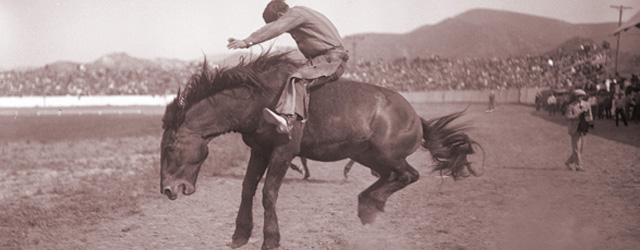
In 1942, the Ballet Russe de Monte Carlo commissioned the choreographer Agnes de Mille to create a ballet for its 1942-43 season. De Mille came up with a concept for a ballet based on a western theme: a gathering of cowboys and ranch hands at a Saturday afternoon rodeo, together with neighbors and a lonely cowgirl.
She chose Aaron Copland, already a recognized master of the American idiom, to write the music.
The ballet was premiered at the Metropolitan Opera that same year and was an instant hit. A few years later Copland fashioned the ballet music into an orchestral suite. The suite is in four movements: Buckaroo Holiday, Corral Nocturne, Saturday Night Waltz, and Hoe-Down.
Copland used a number of American folk tunes in Rodeo. These include “If He’d be a Buckaroo” and “Sis Joe” in the opening lively Buckaroo Holiday; “Goodbye, Old Paint” in the Saturday Night Waltz; and “Bonaparte’s Retreat” and “McLeod’s Reel” in the exuberant Hoe-Down.