This is one of Bach’s most popular and well-known instrumental concertos. While its original composition date is unknown, recent scholarship points to a composition date of 1730-31, during his tenure at Leipzig. The concerto is scored for two solo violins, strings and continuo. It is written in the typical three movements of baroque concertos – a fast opening movement, a slow middle movement, and a lively third movement. Bach weaves his themes in contrapuntal style between the orchestral and the two soloists. The concerto’s texture varies between full orchestra passages and solo passages, which alternate between the two soloists. The second movement adagio is a lyrical duet between the two soloists, accompanied by a harmonic orchestral choir.
This work is part of a collection of six “Brandenburg Concertos” written by Bach in the early 18th century, probably between 1708 and 1721. While probably not conceived as a unitary set of works, Bach gathered all of them together and sent them, together with a dedication, to the Margrave of Brandenburg in 1721 (evidently in pursuit of a musical position). While his job search didn’t pan out, his Brandenburg concerti – only rediscovered in the Brandenburg library and published in 1850 – have since become world-famous.
Each of the concerti is scored for a different combination of string and wind instruments. Brandenburg Concerto No.3 is scored for strings and continuo (cembalo), but with a twist – there are three separate parts for each section (violins, violas and cellos), together with a unifying bass and cembalo part. The result is an intriguing combination of unified orchestral playing interspersed with separate solo lines. Bach himself is said to have played the first viola part in this work, leading the ensemble from that position.
The first movement’s vigorous opening is the basis for all of the other melodic and contrapuntal elements in the movement, with motifs traded back and forth between and within violins, violas, and cellos. For the second movement, Bach only wrote two long chords to be played by the strings. While occasionally played that way, another view is that he intended an improvisatory passage to be played leading into those chords, either by a solo violin or solo keyboard. For today’s performance we have adapted a short passage from a Bach keyboard work to be played on the harpsichord as a bridge to the last movement. The concluding allegro is a rollicking gigue-like dance featuring non-stop contrapuntal lines among the string sections, with notable violin and viola solos.
Czech composer Johann Baptist Vanhal (or Wanhal) lived from 1739 to 1813. He was born in Nechanice, Bohemia, and died in Vienna, where he spent most of his life. Vanhal was well-known among the Viennese composers of his era, and his music was respected by Mozart, Haydn and Beethoven. He was a prolific composer, with 100 string quartets, at least 73 symphonies, 95 sacred works, and a large number of instrumental and vocal works attributed to him. He was also an accomplished instrumentalist, and on a memorable occasion in 1784 played string quartets with Haydn, Dittersdorf, and Mozart.
Vanhal’s bass concerto is one of the best-known Viennese concerti for this instrument and is in the tradition of other works for bass composed by Dittersdorf, Hoffmeister, Pichl and Sperger. While the exact date of its composition is not known, it was possibly written in 1773. The orchestral parts were preserved in manuscript form by Johann-Matthias Sperger, a pre-eminent Viennese bass soloist.
The concerto is in a typical three-movement form, written in classical style. The movements consist of an opening allegro moderato, in sonata form; a second movement adagio, with extended lyrical bass melodies; and a lively allegro in rondo form, featuring elegant solo passagework. In all three movements the solo bass music is virtuosic, exploring its tonal possibilities and spanning the entire range of the instrument.
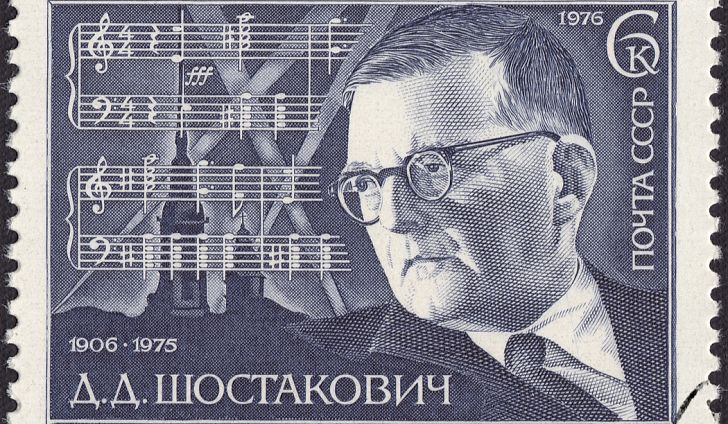
Shostakovich wrote the work for his friend Mstislav Rostropovich, who committed it to memory in four days and gave the premiere on October 4, 1959, with Yevgeny Mravinsky conducting the Leningrad Philharmonic Orchestra in the Large Hall of the Leningrad Conservatory. — Wikipedia
Dvořák composed his violin concerto, a masterpiece of the romantic concerto literature, in 1879. He was inspired to write it after meeting the great violinist Joseph Joachim, to whom he had been introduced by Johannes Brahms. Dvořák sent the initial manuscript to Joachim, who suggested a number of changes to it, particularly in the solo part, and Dvořák subsequently revised it. However, Joachim never performed the concerto, possibly on account of its unorthodox structure. After a number of other revisions, the concerto was premiered in Prague in 1883, with the noted young Czech violin virtuoso František Ondříček as the soloist.
With lush melodies and allusions to Czech folk tunes, the violin concerto fits squarely into Dvořák’s “Slavic” period, during which he composed works such as his 6th Symphony, the Czech Suite, the first set of Slavonic Dances, the E-flat Major String Quartet Op. 51, and the A-Major String Sextet Op. 48.
The concerto is a three-movement work, albeit with some unusual features. It opens with a vigorous orchestral “foreshadowing” theme in A minor; the passionate main theme is introduced by the solo violin a few bars later. A gentle second theme in C Major appears in the middle of the movement. The music then becomes more free-form, taking on an almost a rhapsodic quality. After a restatement of the opening theme, instead of a full recapitulation there is a short transition section featuring solo violin and woodwinds, and the music then moves without a break into the second movement.
The lyrical Adagio is an extended meditation on a free-flowing theme. It is interrupted several times by an abrupt dialogue between the solo violin and horns, later taken up by the full orchestra. The end of the movement features a novel duet between the solo violin and horns before ending in a reverent hush.
The lilting third movement is full of folk-theme references. It opens with an uplifting theme based on the furiant, a spritely Czech dance. In the middle of the movement, a slower section based on the Czech dumka makes its appearance. A final statement of the opening furiant brings the concerto to a joyous close.
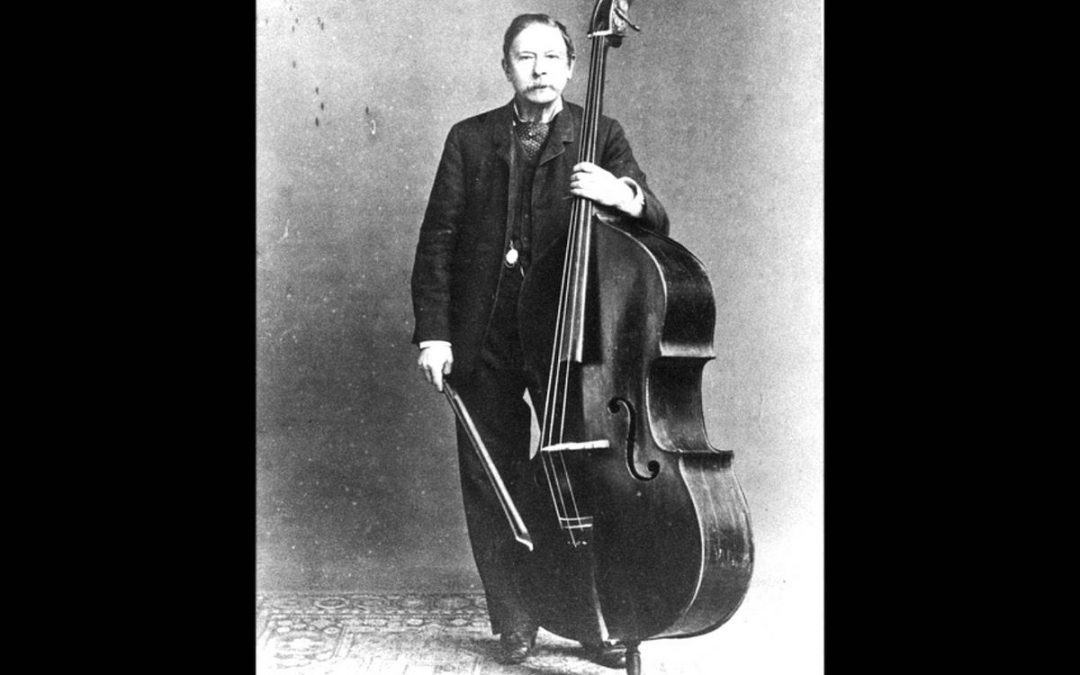
Giovanni Bottesini was a renowned 19th-century double bass virtuoso, known world-wide as the “Paganini of the Double Bass.” He was born in northern Italy into a musical family, starting off his musical life by playing timpani and violin. However, when he heard of a potential bass scholarship at the Milan conservatory, he switched to double bass and within a few weeks was accepted by the conservatory.
After graduating, he started a successful career as a bass soloist and toured throughout Europe, the Americas, Egypt and Turkey. He made a number of tours to the United States starting in 1847. Bottesini had immense influence on the recognition of the double bass as a solo instrument. He composed signature virtuoso works for the instrument and significantly contributed to bass technique.
In later life, Bottesini was renowned as a conductor and composer of operas, concertos, and chamber works. He became a lifelong friend of Guiseppe Verdi and conducted the premiere of Verdi’s Aida in Cairo in 1871.
Bottesini’s Concerto No. 2 in B minor is one of his most performed solo works for the bass. Composed in 1845, the concerto uses the full range of the bass to showcase the player’s virtuosity. It has three movements, and many aspects of the concerto are operatic in character.
The opening Allegro moderato features long lyrical lines, spans the instrument from the lowest register to high harmonics, and features an extended cadenza. The lyrical second movement is an extended aria, introspective and soulful. The final Allegro is full of dash and drama. A cascading opening motif in the strings leads to a lively main theme in the bass, dramatic leaps, virtuosic passagework, and ends in a triumphant flourish.
Here’s a video of The Broadway Bach Ensemble performing the Bottesini Concerto, with Timothy Cobb as bass soloist, along with Mr. Cobb’s encore.
One of the greatest violin concerti of all time, this work was written for and premiered in 1806 by Franz Clement, one of the best-regarded violinists in Vienna. The concerto did not initially meet with much success, and was not often performed in Beethoven’s day. Later in the nineteenth century the concerto gained recognition as a truly sublime work. A key turning point was a concert given in London under the baton of none other than Felix Mendelssohn, with the young violin prodigy Joseph Joachim receiving critical acclaim and propelling the concerto to its rightful place as a masterpiece.
The concerto contains music of extraordinary power, beauty, and subtlety, and places substantial technical and musical demands on the soloist. The first movement contains three interwoven themes played first by the orchestra, repeated and embellished by the soloist. It begins in an unusual fashion with four solo timpani notes starting the opening theme; this four-note motif is played by strings, winds and percussion in over half of the bars in the first movement. A stirring orchestral introduction leads to a seemingly improvisational entrance by the solo violin. The themes are developed and expanded, with plenty of virtuosic violin passages. A calm G minor key interlude featuring bassoons and strings leads eventually to the recapitulation, solo cadenza and stirring end.
The second movement Larghetto is essentially a set of variations, featuring various sections of the orchestra and solo violin, on an 8-bar theme. It has a hymnal quality and contains some of the most ethereal music Beethoven ever wrote.
The final Rondo opens with an ebullient theme played by the soloist first in a low register, then in a very high register, before the orchestra joins in. The theme is repeated several times, with many variations and pyrotechnics by the soloist. It’s a joyous dance between orchestra and soloist, and ends with an uplifting flourish.
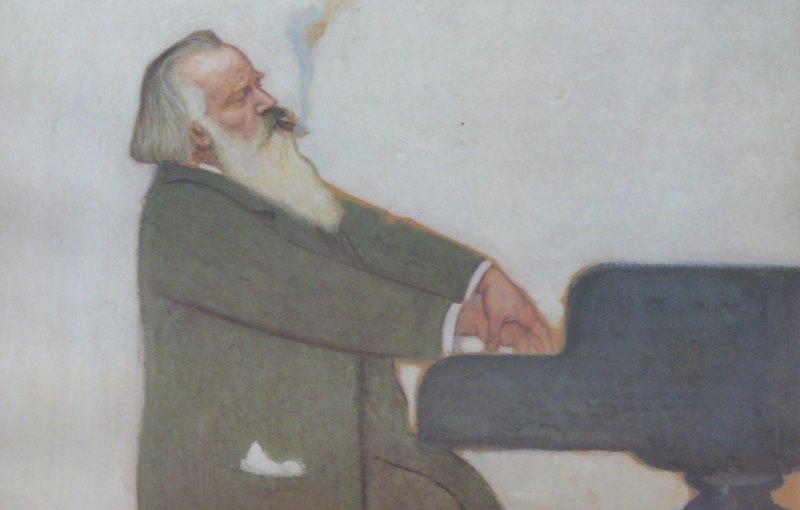
Brahms wrote this magnificent concerto in the four years leading up to 1881, at the height of his career. It is a massive work, symphonic in its proportions. It has four movements in all, adding a scherzo to the usual three movements, making it one of the longest Romantic piano concertos ever written. The relationship between the solo piano and orchestra is unique and varied. While the pianist often has towering solos, fiendishly difficult passages and cadenzas, in many places there are chamber-music like interactions between the pianist and the orchestra.
The concerto opens with a sunny, sonorous horn solo, echoed by the piano and winds; the piano breaks into a dramatic cadenza (akin to the opening of Beethoven’s “Emperor” piano concerto), after which the main theme is resoundingly taken up by the orchestra. A lyrical second theme is introduced by the orchestra, and then dramatically amplified by the piano. The main theme reappears in the horn in a minor key, and also heralds the sonorous recapitulation which eventually brings the movement to a close.
The second movement scherzo is anything but light-hearted. It has a tragic feel to it, punctuated by offbeats first in the lower strings and later on in the piano. A vigorous trio in the middle leads to passages of symphonic grandeur, before finding its way back to the opening theme.
After such a thunderous movement, the third movement, with its lyrical opening ‘cello solo, is a welcome respite of calm and serenity. The piano weaves delicate melodic wisps around a soft orchestral accompaniment, wandering into ever more-foreign sonorities, before the solo ‘cello solo gently guides everyone back to the main theme and key.
After the romantic fireworks and deep emotions of the first three movements, the last movement Allegretto grazioso presents a total contrast. It is lightly scored, with a delicate grace worthy of Mozart and Haydn. The main theme is almost childlike in its simplicity, tossed back and forth between soloist and orchestra. Three themes in the middle have a Hungarian or gypsy air about them. A sudden restatement of the main theme by the piano in fast 6/8 time ushers in the coda and triumphant conclusion of this superlative concerto.
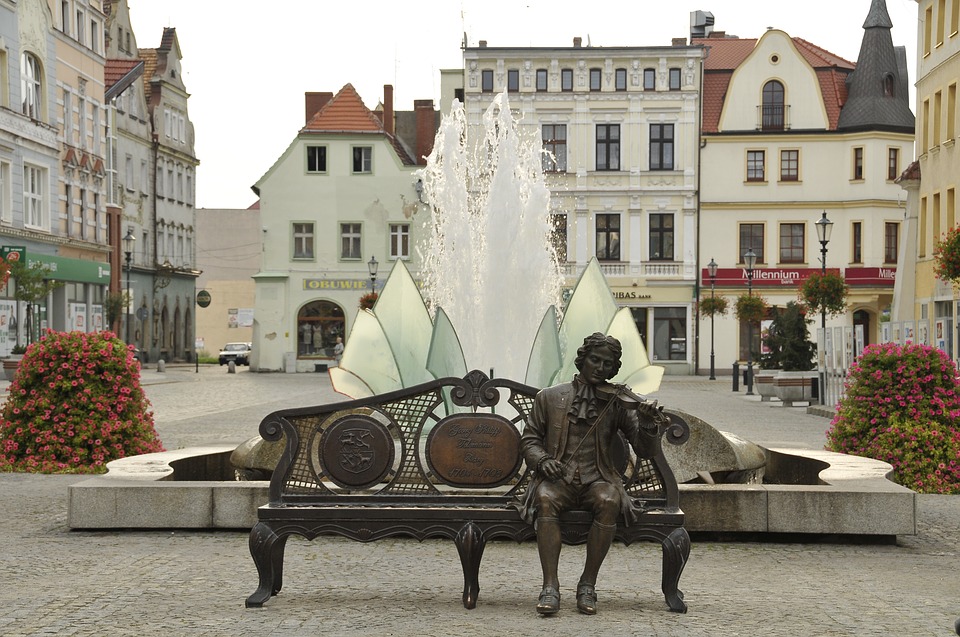
Georg Philipp Telemann was one of the most prominent composers of the baroque era. Widely respected and well-known throughout Europe, he was a friend of Johann Sebastian Bach and corresponded with Handel. A self-taught musician, Telemann early on became adept at playing many instruments, including organ, violin, recorder, viola da gamba, double bass, flute, oboe and bass trombone.
Initially setting out to study law in Leipzig, his musical talents were quickly discovered. After holding a number of posts in Leipzig, Sorau, Eisenach and Frankfurt, in 1721 Telemann became music director in Hamburg of five churches as well as its opera, and remained in Hamburg for the rest of life. Telemann traveled widely throughout Europe, and was familiar with many different styles and schools of musical composition. He was a prolific composer, writing thousands of compositions, many of which survive. His output included operas, cantatas, orchestral suites, concertos, and chamber music.
The concerto grosso we’re playing today was composed by Telemann in 1716 to celebrate the birth of Prince Leopold, heir to Emperor Charles VI in Frankfurt. As befitting the occasion, Telemann scored it for an impressive array of instruments, including three trumpets and two oboes, highlighting them effectively throughout this piece.
The concerto opens with a stately intrada in “French Overture” style, with dotted rhythms.
The second movement is a fugal allegro, first introduced by the violins and oboes, and taken up by the other instruments in turn.
The aria-like third movement features a lyrical oboe solo set against a background of soft strings and continuo.
The dance-like last movement closes out the concerto in joyous fashion, befitting the occasion for which it was written.
A prominent Soviet and Armenian composer, Alexander Arutiunian fused Russian and Armenian musical traditions to form his own unique style. His compositions range from his “Motherland Cantata” (for which he won the Stalin prize in 1948) to his violin concerto (Armenia-88) in homage to a devastating earthquake.
He also wrote a series of well-regarded brass and woodwind concertos. Of these, the trumpet concerto, composed in 1950, is one of his best-known works and a staple of the trumpet solo literature. It is composed in seven sections played without a break. A dramatic improvisatory prelude transitions to a spritely allegro energico; slower introspective sections are interspersed with a periodic return to the “energico” theme. A brilliant cadenza and coda end the concerto with a flourish.