20th Century, Occasional Piece, Works
One of Sibelius’ best-known works, this little waltz comes from the incidental music written in 1903 for Arvid Järnefelt’s play “Kuolema.” Sibelius was a great miniaturist, and in this brief work he creates a world of deep melancholy and sadness, as well as drama.
20th Century, Concerto, Works
Arthur Honegger’s lovely, neoclassical Concerto da Camera dates from 1948 and is scored for the unusual combination of flute, English horn (a larger version of the oboe), and strings. The first movement is like a gracious dialogue, the second a gravely beautiful song with wistful counterpoint and rich, dissonant harmonies. The finale is a rather lively dance, full of gentle good humor.
Romantic, Symphony, Works
On his first trip to the British Isles in 1829 Mendelssohn paid a visit to Scotland, which made a deep impression on him and inspired several future compositions. In 1842, he completed his “Scottish” Symphony (his last symphony) and dedicated it to the young Queen Victoria.
While not programmatic, the symphony is atmospheric and contains many original elements. One of its most striking features is that it is meant to be played continuously – with no break between movements – which was unusual for the time. The first movement opens with a slow introduction in the winds and violas followed by an agitated allegro based upon the opening theme. A recapitulation of the slow opening serves as a transition to the sprightly scherzo, with its alternating dance themes in the winds and strings.
The following adagio is in the style of a “song without words,” with a lyrical theme alternating with a stern foreboding one.
The last movement opens with an agitated, onrushing series of passages before transitioning to a fugue-like section and a quiet transition featuring a clarinet-bassoon duo. The movement closes with a majestic rolling theme, in the major key, full of joy and hope.
20th Century, Suite, Works
Kodály, together with Bartok, was a major figure in the collection and analysis of Hungarian folk music. Many of his compositions are in fact based on Hungarian folk tunes of various types.
The “Marosszék Dances” were originally composed for piano and later arranged by Kodály for orchestra; its first performance took place in 1930. The themes contained in this work are based on 17th-century peasant tunes from various Hungarian provinces.
The opening theme, with its oriental-sounding harmonic minor motif, recurs in several forms during the work. The “dance” tunes are varied, lively and charming in tempo and feeling. They feature colorful effects from the wind instruments, unusual rhythms and vivid atmospheric effects.
The piece ends with a rousing coda and flourish from the brasses.
Baroque, Cantatas, Works
Bach composed this cantata in Leipzig in 1724 “for the 14th Sunday after Trinity.”
The cantata is in seven parts. It opens with a majestic chorus based upon a chromatic descending bass line. The choral passages are an interplay between the alto, tenor and bass lines, with the sopranos joining in with the choral melody. The initial orchestral motif is in turn taken up by the chorus; other themes that Bach first gives to the chorus are then taken up by the strings and winds. T
he following movement is a soprano-alto aria (sung today by the women’s chorus), the text beseeching help from above and the music charming in its dance-like motifs. Tenor and bass recitatives and arias follow, with initial forebodings ending in religious affirmations. The closing chorale ends this work on a note of hope.
Choral, Renaissance, Works
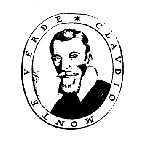
Claudio Monteverdi (1567-1643) lived and worked in Italy during the transition from the Renaissance to the Baroque era in music. During his long life he became one of the most influential and even revolutionary musicians of his time, especially in the fields of operatic and vocal music.
He composed numerous madrigals, which were published in “books.” His Eighth Book of Madrigals was published in 1638 and contains many of his best-known works.
The madrigal “Hor che ‘l ciel” is one of his most beautiful. The text, taken from a sonnet by the 14th-century poet Petrarch, describes a lover, sleeping in the middle of the night, who wakes up tormented by his unrequited love. Masterfully complementing the text, Monteverdi evokes the full gamut of emotions in his music – the stillness of night, pain, war, anger, grief, and (finally) resignation.
Classical, Symphony, Works
In 1790, just two months after the death of Haydn’s employer, Prince Nikolaus Esterházy (for whom Haydn served for more than 40 years, with only brief interruptions), the violinist and impresario Johann Peter Salomon arrived in Vienna to convince Haydn to travel with him to London.
Haydn, now without permanent work and living as a freelance artist, agreed and made the first of two visits to London, composing six symphonies for this event. He paid a second visit for the 1794/1795 season, and again the principal event was a series of concerts with six new symphonies.
In contrast to his small orchestra at the Esterházy estate, the London orchestra of Salomon was a full-sized orchestra, providing Haydn with new possibilities. As a result, he composed the 12 symphonies (nos. 93-104) that count among the best he had ever written: The London Symphonies.
When Haydn finally returned to Vienna, in 1795, it was as a financially and artistically successful composer.
First performed in 1794, Symphony No. 101 is part of these famous London Symphonies, composed for his second stay in London. The second movement is responsible for the symphony’s nickname, “The Clock”: you can hear the clock-like tick-tack, introduced by the bassoons and string pizzicato, throughout the movement.
Baroque, Suite, Works
This Suite unites music from the dramatic output of Purcell. Barbirolli, the famous English conductor, took excerpts from “The Gordian Knot Untied,” “Dido and Aeneas” and “King Arthur” and re-orchestrated them slightly, mostly by giving the sung lines of arias to solo instruments.
20th Century, Concerto, Works
No notes available.
Baroque, Suite, With Audio, Works
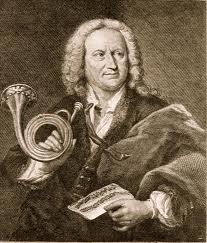
As part of his vast output of vocal and orchestral works, Bach wrote four orchestral suites (or “ouvertures”), probably between 1724 and 1739. They are based on the 18th-century “French style” of overture – a slow opening section with a faster middle section, followed by a variety of dance movements.
Bach’s Fourth Suite is brilliantly scored for trumpets, oboes, timpani and strings, and features all of these forces in its scope.
From the Performance of Fall, 2017.
It begins with a magnificent overture, followed by a lively fugue in 9/8 time showcasing Bach’s mastery of counterpoint, concluding with the stately opening procession.
The following four dance movements are diverse, each showcasing different sections of the orchestra. Trumpets, oboes and bassoon feature in the lively Bourrée and robust Gavotte; woodwinds and strings combine in an elegant Menuet, with a middle section scored for solo strings.
The Suite ends with a rousing Réjouissance (literally, rejoicing or celebration) featuring the entire ensemble.