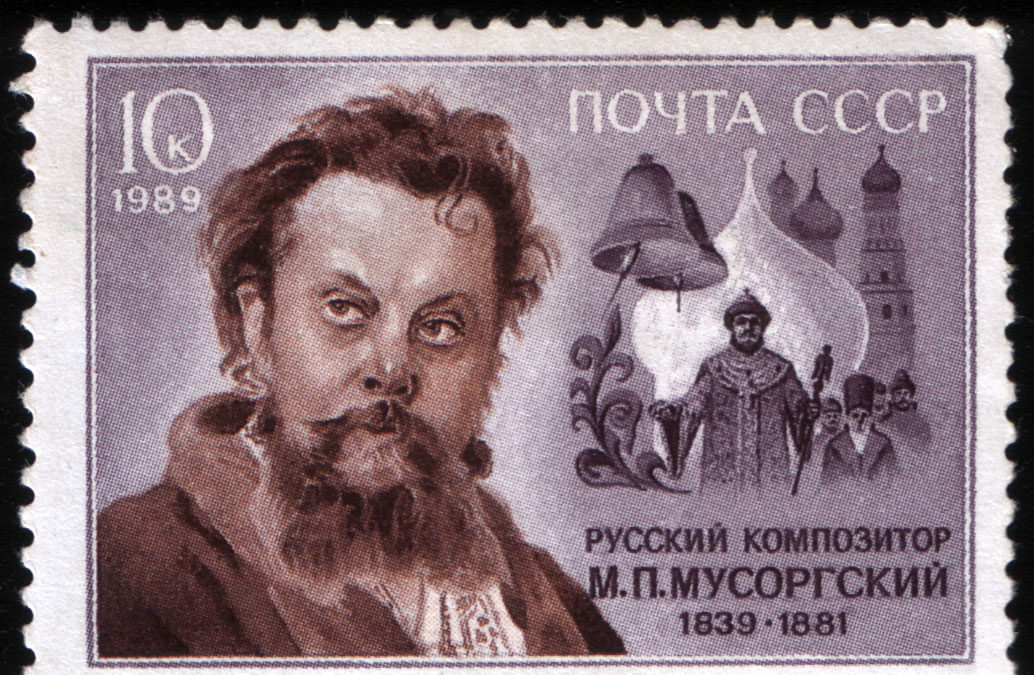
Mussorgsky was a member of an influential group of Russian composers known as “The Five” – Mily Balakirev, César Cui, Modest Mussorgsky, Nikolai Rimsky-Korsakov and Alexander Borodin. Together they forged a uniquely Russian musical style based on the country’s folklore and history. Mussorgsky himself composed numerous works for piano, orchestra, opera and voice. Among his best-known works are the opera Boris Godunov, the orchestral tone poem Night on Bald Mountain, and the piano suite Pictures at an Exhibition.
The piano suite was composed in 1874 and was based on a series of drawings and paintings by the Russian artist Viktor Hartmann. It proved so popular that numerous arrangements have been made of it (the Ravel orchestration done in 1922 is the best-known of these). The first orchestration of Pictures at an Exhibition, which we are performing at this concert, was prepared in 1886 by Mikhail Tushmalov, a pupil of Rimsky-Korsakov. Rimsky himself oversaw the editing of the score and conducted the première, in 1891.
This orchestral arrangement contains most of the original movements of the piano suite. After the opening Promenade, the mood shifts to the “Old Castle,” with haunting melodies introduced by bass clarinet and English horn. Next is the spritely “Ballet of the Chicks in their Shells” featuring strings and woodwinds; “Samuel Goldenberg and Schmuyle” is a ponderous dialogue between two Polish Jews, one rich and the other poor. “Market at Limoges” depicts women arguing furiously in a small French town marketplace. The tone shifts abruptly in “Catacombs;” punctuated by sudden brass chords, it is based on a painting in which Hartmann is examining the famous underground catacombs of Paris by lantern light. In the following “Con mortuis in lingua mortua,” the opening “Promenade” theme is eerily reprised in a minor key. The “Hut on Hen’s Legs” is based on a Hartmann drawing of a clock in the form of a witch’s hut; Mussorgsky puts the focus on the witch’s flight, with dramatic scales and passages in thirds.
It leads directly to the grand last movement, “The Great Gate of Kiev”. It is based on Hartmann’s design of a monumental gateway to the city in an ancient massive Russian style, capped with a cupola shaped like a Slavonic helmet. Its familiar grand theme is repeated several times with increasing intensity, interspersed with wind interludes reminiscent of Russian Orthodox chants. It ends in a triumphal paroxysm of massive chords and pealing bells.
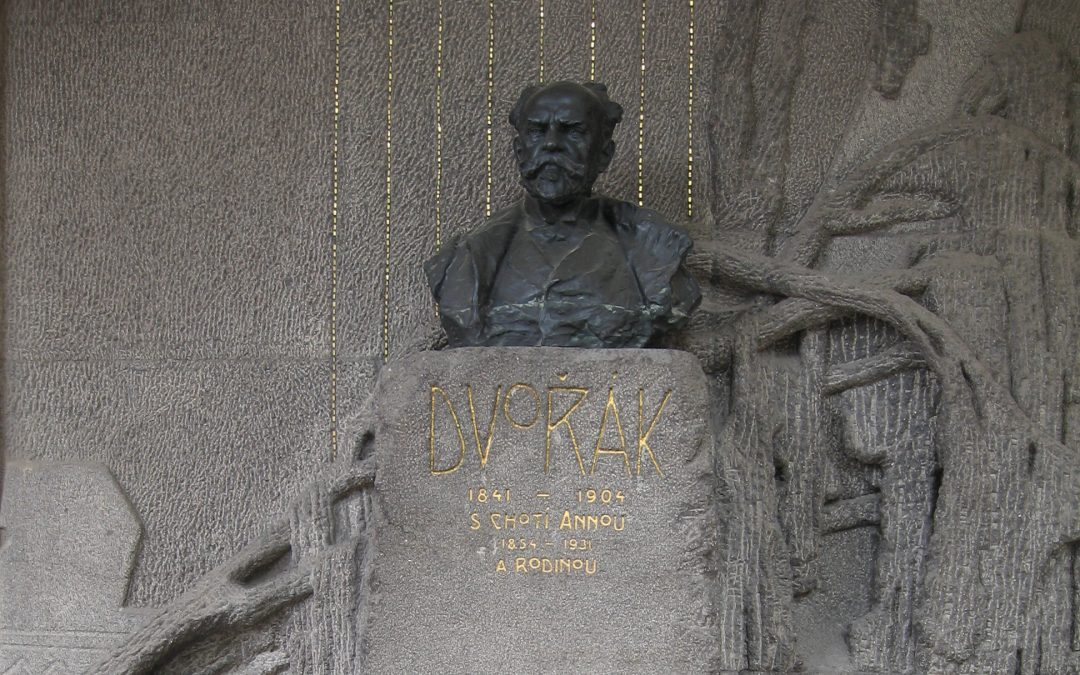
Dvořák’s masterful Sixth Symphony is at once a sunny, lyrical work with moments of great subtlety, power and magnificence.
It was written in 1880, only three years after Brahms’ Second Symphony, to which it has certain similarities in choice of keys and orchestration. That being said, this is Dvořák’s first “mature” symphony, written in the “Slavic” style that characterizes his other orchestral and chamber works of that period. The Sixth Symphony was premiered in Prague in 1881 and soon became a staple of the orchestral repertoire.
Dvořák incorporates Czech folk melodies throughout, in particular in the famous “Furiant” third movement, based on a Czech dance. The first movement starts on a serene and sunny note, evoking the Bohemian countryside; a vigorous outburst by the horns and violins leads to majestic restatement of the main theme by the entire orchestra. A lyrical second theme is heralded by the oboe; both themes are thoroughly developed and interwoven throughout the entire orchestra. The second movement is a sweet nocturne, with counter-themes tossed back and forth between strings, winds and brass.
The Furiant is all about energy and syncopation, evoking Dvořák’s iconic Slavonic Dances. After a calm and melodious trio section, the Furiant returns in full force. The last movement starts out innocently enough in the strings, with a playful second triplet-based theme, before its massive development in the winds and brass. A stirring rendition of the main theme in slow motion, featuring the full-throated brass section, heralds the triumphant finale.
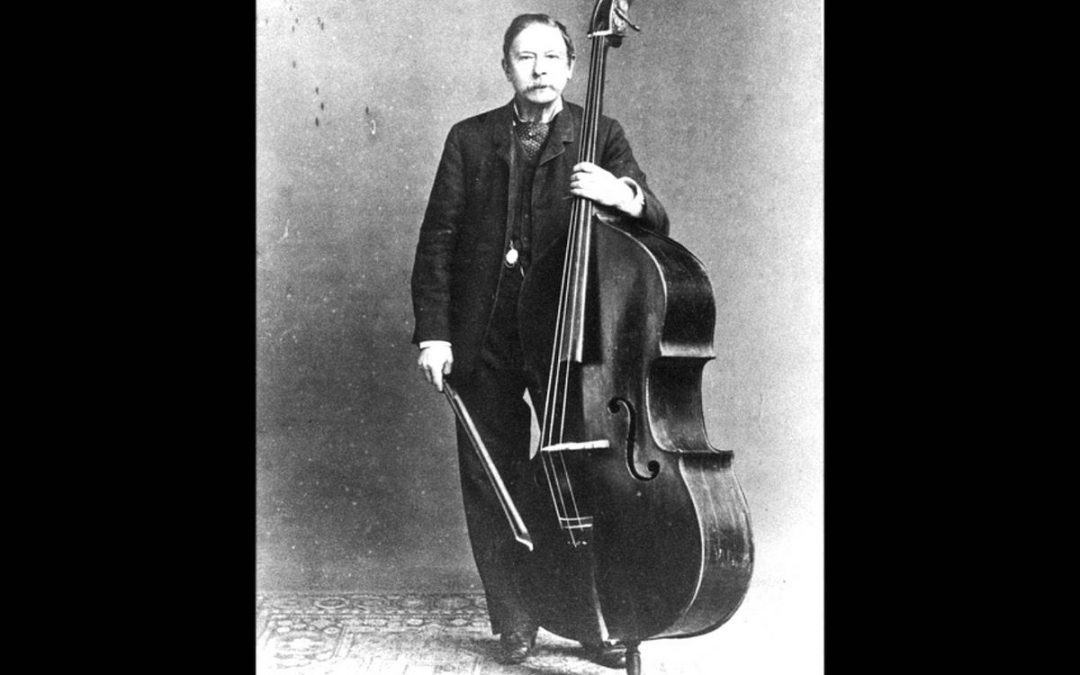
Giovanni Bottesini was a renowned 19th-century double bass virtuoso, known world-wide as the “Paganini of the Double Bass.” He was born in northern Italy into a musical family, starting off his musical life by playing timpani and violin. However, when he heard of a potential bass scholarship at the Milan conservatory, he switched to double bass and within a few weeks was accepted by the conservatory.
After graduating, he started a successful career as a bass soloist and toured throughout Europe, the Americas, Egypt and Turkey. He made a number of tours to the United States starting in 1847. Bottesini had immense influence on the recognition of the double bass as a solo instrument. He composed signature virtuoso works for the instrument and significantly contributed to bass technique.
In later life, Bottesini was renowned as a conductor and composer of operas, concertos, and chamber works. He became a lifelong friend of Guiseppe Verdi and conducted the premiere of Verdi’s Aida in Cairo in 1871.
Bottesini’s Concerto No. 2 in B minor is one of his most performed solo works for the bass. Composed in 1845, the concerto uses the full range of the bass to showcase the player’s virtuosity. It has three movements, and many aspects of the concerto are operatic in character.
The opening Allegro moderato features long lyrical lines, spans the instrument from the lowest register to high harmonics, and features an extended cadenza. The lyrical second movement is an extended aria, introspective and soulful. The final Allegro is full of dash and drama. A cascading opening motif in the strings leads to a lively main theme in the bass, dramatic leaps, virtuosic passagework, and ends in a triumphant flourish.
Here’s a video of The Broadway Bach Ensemble performing the Bottesini Concerto, with Timothy Cobb as bass soloist, along with Mr. Cobb’s encore.
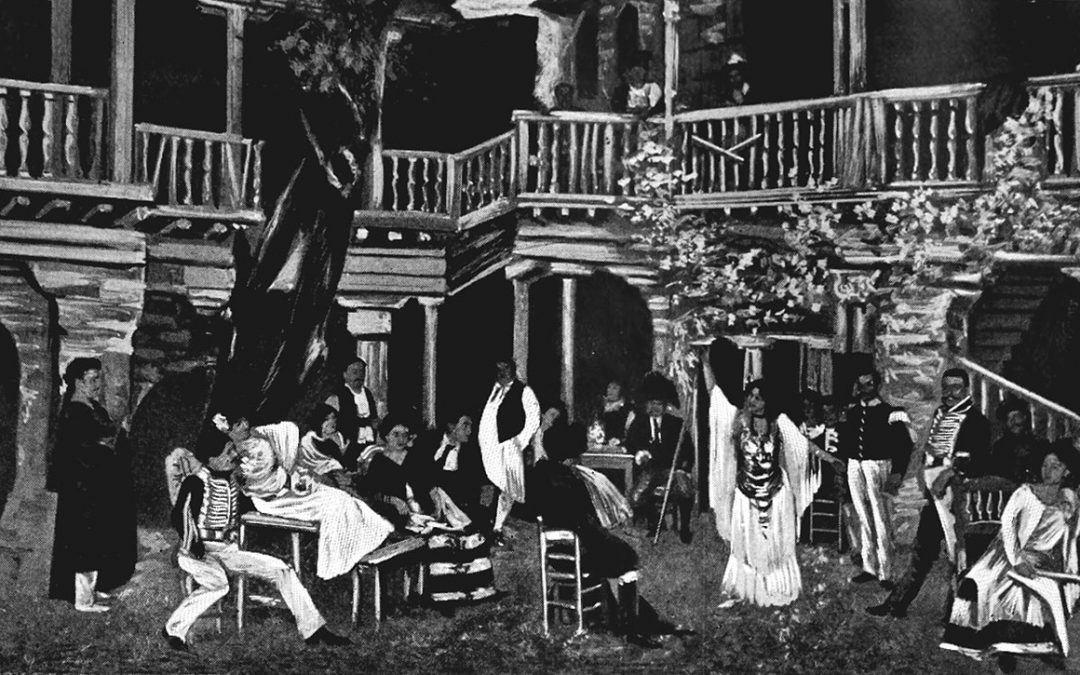
Bizet wrote his famous opera Carmen towards the end of his life. The plot — a gypsy woman who seduces a soldier, joins a smuggler band in the mountains, falls in love with a toréador (bullfighter), and is finally murdered by her rejected soldier — shocked French audiences for its portrayal of lower-class life, realism and debauchery. Unfortunately for Bizet, the opera was not a success, and he died an untimely death just three months after the premiere.
After his death, however, Bizet’s close friend Ernest Giraud made substantial changes to the opera’s format, and Carmen is now recognized as Bizet’s operatic masterpiece. Giraud subsequently arranged two suites from Carmen’s music. The first Carmen Suite which we’re performing today, includes five instrumental sections, including the famous “Les Toréadors;” a sixth movement, Carmen’s “Séguidille,” was arranged by the German composer Fritz Hoffman in the early 20th century and is now commonly included in the Suite.
While the movements are not in the order of the opera, they are atmospheric in themselves: the “fate” motif of the Prelude; the rhythmical Spanish Aragonaise; the dreamy Intermezzo featuring harp and winds; Carmen’s seductive song (Séguidille) “before the ramparts of Seville”; the military motif of the Spanish dragoons (Les Dragons D’Alcala); and, of course, the triumphant procession of the Toréadors from the opera’s prelude and Act 4.
One of the greatest violin concerti of all time, this work was written for and premiered in 1806 by Franz Clement, one of the best-regarded violinists in Vienna. The concerto did not initially meet with much success, and was not often performed in Beethoven’s day. Later in the nineteenth century the concerto gained recognition as a truly sublime work. A key turning point was a concert given in London under the baton of none other than Felix Mendelssohn, with the young violin prodigy Joseph Joachim receiving critical acclaim and propelling the concerto to its rightful place as a masterpiece.
The concerto contains music of extraordinary power, beauty, and subtlety, and places substantial technical and musical demands on the soloist. The first movement contains three interwoven themes played first by the orchestra, repeated and embellished by the soloist. It begins in an unusual fashion with four solo timpani notes starting the opening theme; this four-note motif is played by strings, winds and percussion in over half of the bars in the first movement. A stirring orchestral introduction leads to a seemingly improvisational entrance by the solo violin. The themes are developed and expanded, with plenty of virtuosic violin passages. A calm G minor key interlude featuring bassoons and strings leads eventually to the recapitulation, solo cadenza and stirring end.
The second movement Larghetto is essentially a set of variations, featuring various sections of the orchestra and solo violin, on an 8-bar theme. It has a hymnal quality and contains some of the most ethereal music Beethoven ever wrote.
The final Rondo opens with an ebullient theme played by the soloist first in a low register, then in a very high register, before the orchestra joins in. The theme is repeated several times, with many variations and pyrotechnics by the soloist. It’s a joyous dance between orchestra and soloist, and ends with an uplifting flourish.
Brahms wrote this magnificent concerto in the four years leading up to 1881, at the height of his career. It is a massive work, symphonic in its proportions. It has four movements in all, adding a scherzo to the usual three movements, making it one of the longest Romantic piano concertos ever written. The relationship between the solo piano and orchestra is unique and varied. While the pianist often has towering solos, fiendishly difficult passages and cadenzas, in many places there are chamber-music like interactions between the pianist and the orchestra.
The concerto opens with a sunny, sonorous horn solo, echoed by the piano and winds; the piano breaks into a dramatic cadenza (akin to the opening of Beethoven’s “Emperor” piano concerto), after which the main theme is resoundingly taken up by the orchestra. A lyrical second theme is introduced by the orchestra, and then dramatically amplified by the piano. The main theme reappears in the horn in a minor key, and also heralds the sonorous recapitulation which eventually brings the movement to a close.
The second movement scherzo is anything but light-hearted. It has a tragic feel to it, punctuated by offbeats first in the lower strings and later on in the piano. A vigorous trio in the middle leads to passages of symphonic grandeur, before finding its way back to the opening theme.
After such a thunderous movement, the third movement, with its lyrical opening ‘cello solo, is a welcome respite of calm and serenity. The piano weaves delicate melodic wisps around a soft orchestral accompaniment, wandering into ever more-foreign sonorities, before the solo ‘cello solo gently guides everyone back to the main theme and key.
After the romantic fireworks and deep emotions of the first three movements, the last movement Allegretto grazioso presents a total contrast. It is lightly scored, with a delicate grace worthy of Mozart and Haydn. The main theme is almost childlike in its simplicity, tossed back and forth between soloist and orchestra. Three themes in the middle have a Hungarian or gypsy air about them. A sudden restatement of the main theme by the piano in fast 6/8 time ushers in the coda and triumphant conclusion of this superlative concerto.
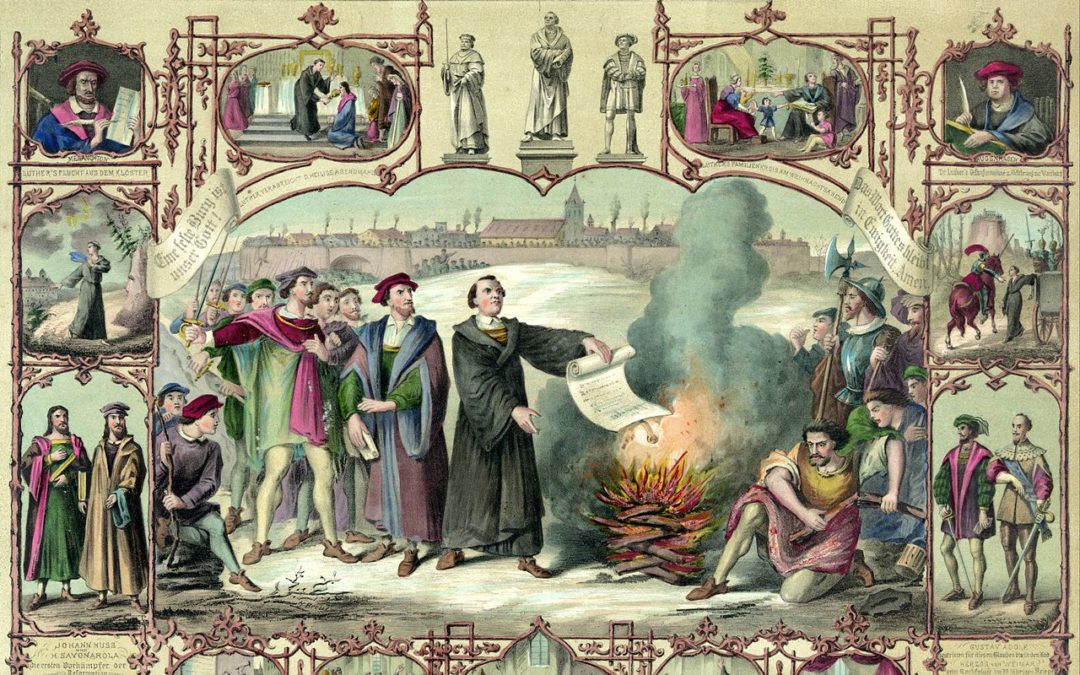
The “Reformation” is one of Mendelssohn’s most programmatic works. As befits its title, the symphony’s first and last movements each contain elements of religious struggle and triumph. Though catalogued as Mendelssohn’s fifth symphony, it is actually his second “full” symphony, written in 1829-30, just three years after Beethoven’s death.
He originally composed his “church symphony” to be played at the 300th anniversary of the Augsburg Confession of 1530 (which defined the doctrines of the Lutheran Church). For various reasons, however, his new symphony was not chosen for that occasion. Mendelssohn then sought out other venues for it to be performed, and it was eventually performed in Berlin and played at a rehearsal in Paris. Unfortunately, it was not favorably received by critics or musicians, even after Mendelssohn made revisions to it in 1832. He finally “shelved” the symphony for the remainder of his life, refusing to let others see it, and even contemplated destroying it. The symphony was finally published in 1868, over 20 years after his untimely death. Since four other Mendelssohn symphonies had already been published, this one was presented as his “Fifth” Symphony. Since then, it has made its way into the standard symphonic repertoire, albeit in Mendelssohn’s “revised” 1832 version. The version we’re performing today is the original 1829 version, which notably includes a rarely-performed Recitative movement before the Finale.
While written in Mendelssohn’s unique style, the “Reformation” contains references to other composers, including Mozart (opening theme based on four-note “Jupiter Symphony” theme); Bach (fugal and counterpoint sections in the fourth movement); and most interestingly, Beethoven – in the choice of key (D minor/Major), the use of a recitative before the last movement, and a last movement based on a hymn or song (all possibly hearkening back to Beethoven’s Ninth Symphony).
The first movement opens in an “antique” polyphonic style reminiscent of Catholic Church ceremony, interrupted increasingly by strident brasses and woodwinds (possibly showing the Catholic order being challenged by the new Protestant movement). At the end of the opening Andante, Mendelssohn has the strings softly playing the “Dresden Amen” — a rising six-note theme. The fiery Allegro which follows is full of musical struggle and combat, with violent string passages met with wind outbursts based on a two-note theme (also derived from the “Dresden Amen”).
Andante – Allegro con fuoco
by Felix Mendelssohn | The Broadway Bach Ensemble, Fall 2017
The second movement is a carefree scherzo, with a singing trio section featuring oboes and strings.
Allegro Vivace
by Felix Mendelssohn | The Broadway Bach Ensemble, Fall 2017
The intense third movement is an orchestral “song without words” featuring strings, oboes and bassoons, in turns introspective and impassioned.
Andante
by Felix Mendelssohn | The Broadway Bach Ensemble , Fall 2017
The Recitative, prominently featuring a solo flute and wind choirs, follows without a break. It leads directly into the choral finale based on the Lutheran hymn “Ein feste Burg ist unser Gott” (A mighty fortress is our God). The opening chorale is introduced by solo flute and woodwind choir. Mendelssohn develops the movement into increasingly faster variations, complete with Bachian counterpoint in the strings. He overlays passages from the chorale in the middle of the movement, and uses it again in the coda as an exclamation point to end the symphony in dramatic fashion.
Andante con moto – Allegro vivace – Allegro maestoso
by Felix Mendelssohn | The Broadway Bach Ensemble, Fall 2017
Brahms composed his violin concerto in the last half 1878, close on the heels of his second symphony. He worked on it closely with the Hungarian violin virtuoso Joseph Joachim (in fact, Joachim also wrote the cadenza most often heard in contemporary performances).
While originally conceived in four movements, this concerto has three — an opening Allego non troppo, a middle movement Adagio, and the final Allegro giocoso. It is practically symphonic in scope, with alternating passages by the orchestra and soloist designed to fully explore the rich thematic material.
The first movement opens with a lengthy orchestral exposition which contains most of the thematic material used by both the soloist and orchestra — a calm rising and falling triad (faintly reminiscent of the second symphony); an intense rising chromatic passage played in unison; a mysterious and soft descending three-note pattern; and an agitated and jagged dotted-note passage setting up the first entrance of the solo violin. The violin picks up on these themes and expands them, both in fiery passagework and lush melodies. The lengthy cadenza is a masterwork by Joachim, a tour-de-force of virtuosity and melody.
The second movement Adagio begins with a hushed wind choir, featuring a notable oboe solo, which is echoed by the solo violin. After an impassioned development, the opening theme returns with a violin obbligato on top of the original wind theme. The last movement is a gypsy-like rondo, ending with the theme restated as a march.
Schumann composed this masterpiece for four French horns and orchestra in 1849, one of his most productive musical years. Rarely performed because of its unusual instrumentation and difficulty, the Konzertstück is rich in inventiveness and lyricism. While titled a “concertpiece,” it is essentially a concerto for four horn soloists.
There are three interlinked movements, played without a break. The initial “Lebhaft” opens with two strong orchestra chords, immediately followed by rising horn arpeggios heralding the main theme. The slow “Romanze” movement features a tender theme in the oboes, solo ‘cello and violas, picked up in turn by the horns; a flowing chorale movement appears in the middle of the movement. The lively last movement is full of horn figurations. It features brisk dialogue between the orchestra and soloists, and a short chorale interlude based on the middle movement, before drawing to a bravura ending.
A sunny, exciting and powerful masterpiece, this symphony is dedicated to the great Hans von Bülow in gratitude for that conductor’s championing of Dvořák’s orchestral works. Dvořák composed this symphony in just six weeks in 1875, at a fairly early stage in his musical life.
He had just applied for and received an Austrian Empire state grant; members of the judging committee awarding him the grant included his later mentor Johannes Brahms and the famed music critic Eduard Hanslick. Energized by the recognition, Dvořák embarked on a frenzy of composition, including a number of well-known chamber works as well as this symphony.
Although composed in 1875, it was only premiered in 1879 and published considerably later (1888), with a high opus number chosen by his music publisher. That said, this masterful symphony bears all of Dvořák’s hallmarks — rich lyricism, lush melodies, masterful development. The opening Allegro ma non troppo opens with a cheerful pastoral clarinet theme, taken up by winds and strings in turn; it is complemented by an introspective second theme introduced by the violins and oboe.
The slow second movement is soulful with a hint of melancholy, with sudden powerful outbursts from massed strings, winds and brass.
The lively third movement follows with almost no break. At first keeping the same mood of the slow movement, it transitions abruptly to a cheerful folk-like tune, with a lilting trio. The dramatic last movement opens with a powerful eruption from the lower strings, picked up in turn by winds and brass. Its harmonic tension is most unusual. It open in the key of A minor, and stays there for over 50 measures until the main theme makes its emphatic appearance in the main key of F major. A soaring second theme is introduced by the clarinet and second violin; both themes are developed extensively. The first movement theme reappears at the end, first in the high winds and horn, then stirringly in the trombone, before the symphony draws to its triumphant close.