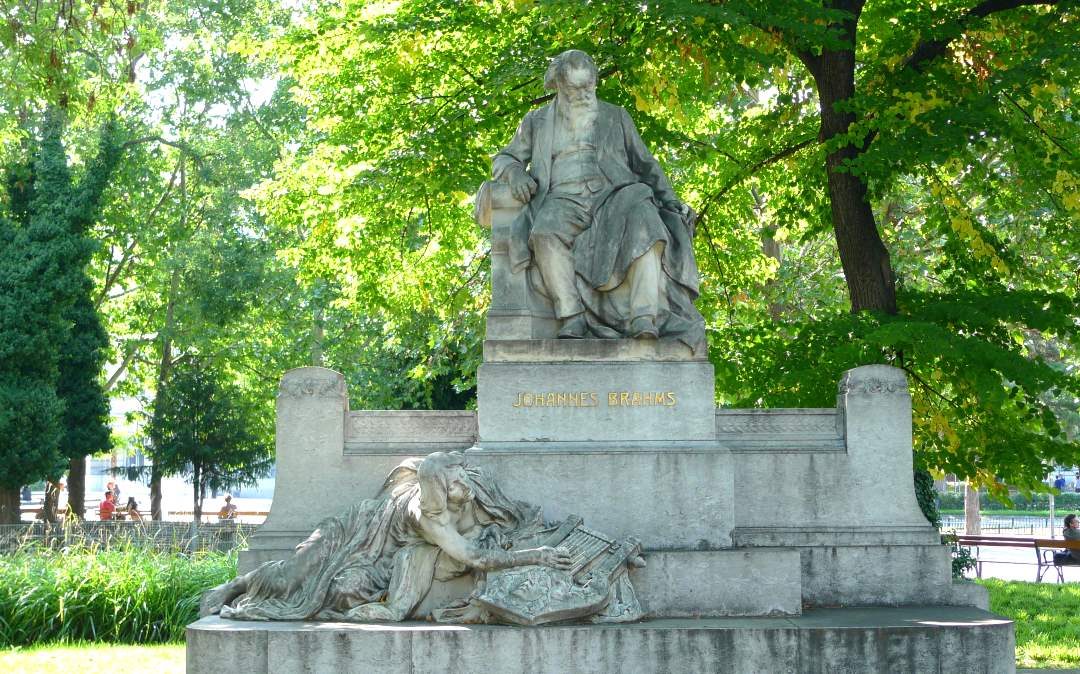
Johannes Brahms wrote his Symphony No. 3 in F Major in 1883 at the age of 50. It is the shortest of his four symphonies, written six years after his Second Symphony, in D Major. During this period Brahms was anything but idle; in fact, these six years were some of the most prolific years in symphonic composition of his life. Masterworks like his Academic Festival Overture, Tragic Overture, Piano Concerto No. 2 and the Violin Concerto were all created in between his two middle symphonies.
Brahms’ orchestral forces for his symphonies are actually quite modest in comparison to the ones that are used in other romantic compositions from this period. In this F Major symphony, he uses 2 flutes, 2 oboes, 2 clarinets, 2 bassoons and 1 contrabassoon for the woodwind section. Besides the usual string section, the brass and percussion have 4 horns, 2 trumpets, 3 trombones and timpani, and are used rather sparingly throughout the entire work.
Many people consider this symphony to be rather “pastoral,” given the key for the work and the two lovely and lyrical center movements; yet the outer movements provide insights that the symphony is anything but “tranquil.” The symphony’s first movement, for instance, is well known for its rhythmic juxtapositions. Written in 6/4, it is filled with syncopations, hemiolas and strong accents, which purposefully and successfully blur the bar lines and create illusions to the regular meter, leaving listeners with a sense of instability. At the same time, the key of the first movement constantly straddles between F Major and f minor. Both conflicts in rhythm and tonality don’t seem to settle until the end of the movement.
On the other hand, even though the last movement is seemingly more stable rhythmically, its tonality remains largely in f minor. Not until the last 43 bars of the work does it settle into the home key of F Major. Regardless of how listeners may perceive the moods of the work, the one thing that will give us the feeling of completion is that the opening theme in the first movement, first in f minor, returns at the very end of the fourth movement in F Major.
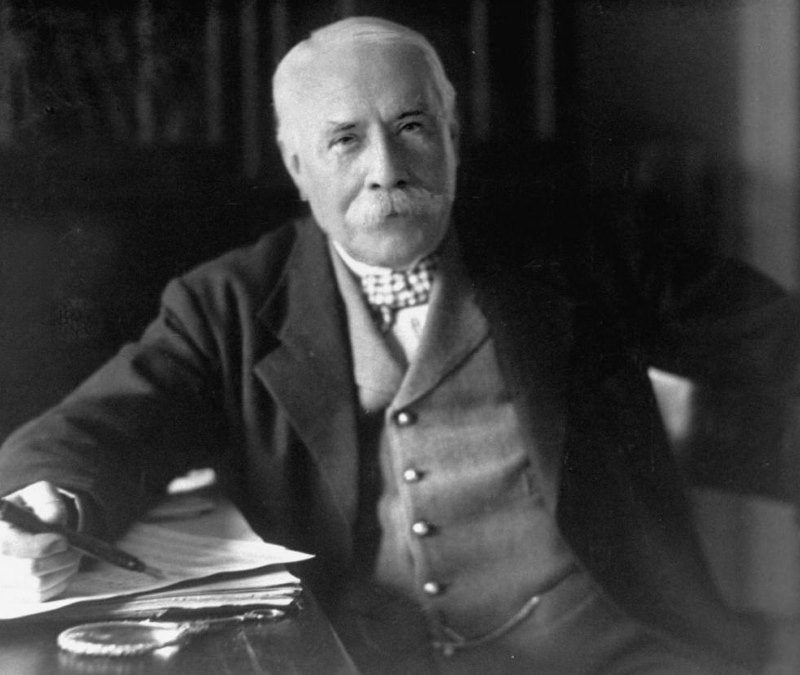
Sir Edward Elgar was a dominant force in English music at the turn of the 20th century. His magnificent ‘cello concerto was composed in 1919; more recently, it has become identified with the great ‘cellist Jacqueline du Pré, who made it into her signature piece (and is used in the movie Hilary and Jackie).
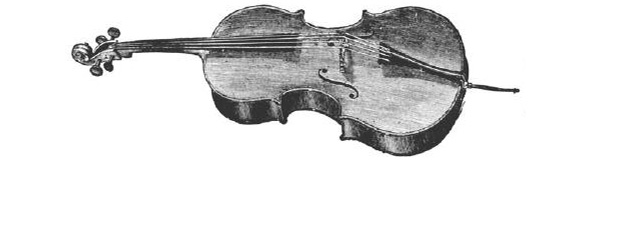
This four movement work displays an astonishing sweep of emotion and melody, from tragedy and pathos to exuberance. After a declamatory ‘cello opening, the first movement settles into an introspective lilt, punctuated by solo flourishes and dramatic orchestral statements. It is followed without a break by the witty second movement, with its brilliant solo passagework and lightly textured accompaniment. A romantic adagio allows the ‘cello to display its singing qualities to the fullest. The dramatic last movement is at times almost operatic, with the ‘cello and orchestra playing off each other’s themes; towards the end, themes from the adagio and opening movements make an encore appearance before a dash to the dramatic finish.
This is Dvořák’s last concerto, largely written in 1894-5 during his time in New York. Dvorak had come to the United States in 1892 in response to an invitation to become the head of the National Conservatory of Music in New York City, and stayed here until 1895. Dvorak composed a number of his best-know works during his American interlude, including his 9th (“New World”) Symphony, the “American” String Quartet (Op. 96), and the ‘cello concerto. He was not initially inclined to write a concerto featuring the ‘cello; he changed his mind after attending a concert in New York of a ‘cello concerto by Victor Herbert, which inspired him to write his own.
The first movement opens with a quiet statement of the theme in the woodwinds, gradually rising to a boisterous rendition by the full orchestra. The wistful second theme is introduced by the horn. Both themes are featured in the solo ‘cello, the first theme now reappearing as a heraldic restatement. There is a constant interweaving and interplay of soloist and orchestra, punctuated by solo pyrotechnics that grow out of the thematic material. A number of “grandioso” passages by the orchestra also feature the first theme in heroic fashion.
The introspective second movement begins softly with clarinets; the lyrical melody is picked up in turn by the soloist. The middle of the movement is based on a theme from a Czech song (“Leave me Alone”), written as an homage to his beloved sister-inlaw Josefina, who was in failing health. A solo cadenza is accompanied by flute and other woodwinds; a hushed passage featuring ‘cello harmonics brings the movement to a close.
The third movement is based on a robust theme introduced by the winds, then picked up by the soloist and orchestra in turn. The end of the movement also features another section of the song “Leave me Alone,” this time in the solo violin accompanying the ‘cello. The movement gradually winds down into a sighing whisper; a short rousing conclusion brings the concerto to a triumphant close.
This short overture and its accompanying march have an unusual history. The theme, first introduced by the piccolo, is based on a Chinese tune first noted by Jean-Jacques Rousseau in his Dictionnaire de Musique in 1768. Described as an “Air Chinois,” the tune was brought to France from China in the 18th century by a French missionary.
The Turandot story itself was derived from Central Asian/Persian sources; it involves a prince who travels to China, falls in love with the Emperor’s daughter, solves deadly riddles to win her, and (after much travail) weds her in the end. The story has been used by (among others) Carlo Gozzi, an Italian 18th-century playwright, and most famously, Puccini in his 20th century opera.
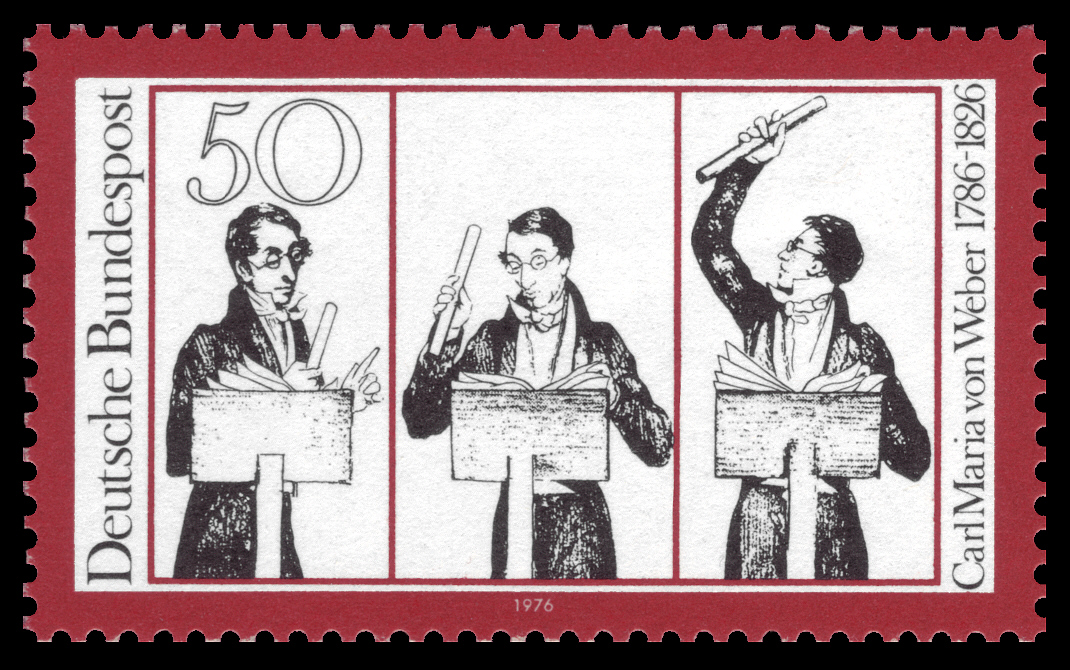
In 1804 the noted German author Schiller translated Gozzi’s text into German. For the 1809 premiere, Weber wrote an overture and six related pieces as incidental music, with a unifying theme based on the “Air Chinois.” The overture develops the basic theme by exploring different harmonic and orchestral combinations, and features all sections of the orchestra.
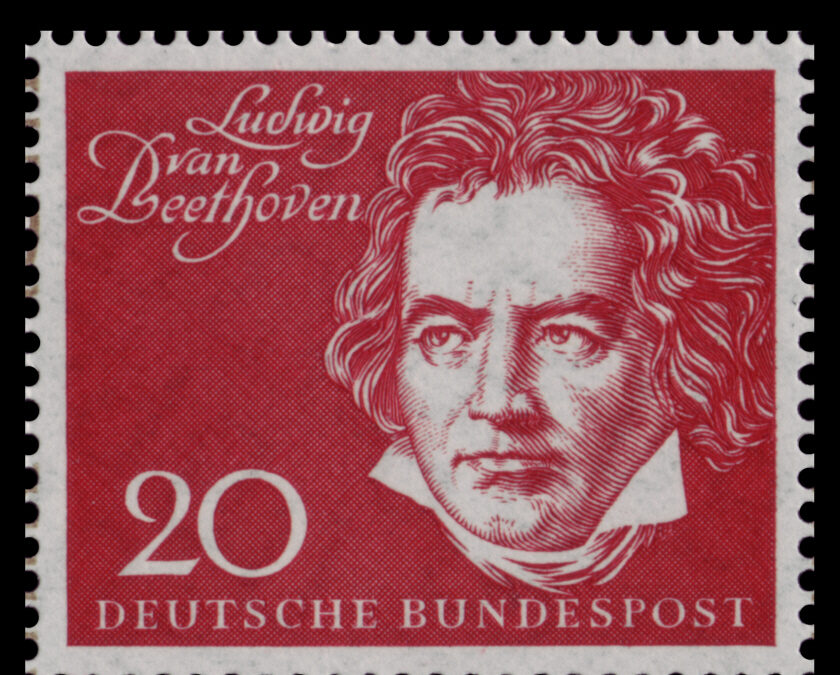
Driving rhythms characterize this joyous symphony, described by none other than Wagner as “the apotheosis of the dance.” Premiered in Vienna 1813, Beethoven’s 7th Symphony received enthusiastic reviews, with the audience even demanding an encore of the second movement! Outside Vienna, reaction was not as favorable (the noted composer Carl Maria von Weber said that “Beethoven was ripe for the madhouse;” Friedrich Wieck, Clara Schumann’s father, called it “the work of a drunkard”). Little did they know; over time these critics were proved wrong, and this magnificent, powerful symphony has become one of Beethoven’s most enduring and well-loved works.
Each of its four movements is built around a specific rhythmic motif. After a contemplative introduction (almost a movement in itself), the opening Allegro’s three-note theme is introduced by the woodwinds, taken up by the strings in turn, and traded back and forth among strings, woodwinds and brass.
The famous second movement Allegretto is a somber march built around a five-note motif (long-short-short-long-long) starting in the lower strings, with a subtle singing countermelody taken up in turn by the rest of the orchestra. A lyrical interlude featuring clarinet and bassoon offers a warm ray of sunshine in the middle of the movement.
The third movement Presto is based on a relentless three-note motif, interspersed with a sonorous trio section featuring winds and brass. This combination is repeated several times (with surprise variations).
The energetic last movement has been described as “elemental fury unleashed.” It features driving 16th-note runs, offbeat accents, brass/wind fanfares and exclamation points, and a long coda culminating in a marking of “triple forte” (fff) — the first use of that marking in a Beethoven score. Accelerating driving passages bring this symphony to its triumphant conclusion.
The piece was written quite quickly during the summer of 1877. While Brahms had struggled for nearly two decades to complete his first symphony, his sunny, happy, second symphony was written within just a few months while he was on summer holiday in the quaint Austrian resort town of Pörtschach am Wörthersee.
The entire symphony is based upon a three-note motive first stated in the ‘cellos and basses in the very first bar of the piece (D-C#-D). You will hear this motive again and again throughout the entire work; it is almost like one of those “where’s Waldo?” puzzles. As you listen see if you can catch it in all of Brahms’ different settings, inversions, and changes of instrumentation.
The first movement captures the beauty of summer by the lake. After playing through the piece for the first time, one of Brahms’ colleagues wrote: “It is all rippling streams, blue sky, sunshine, and cool green shadows. How beautiful it must be at Pörtschach.”
The second movement is a little darker and brooding in texture. It is thoughtful and reflective, and in the middle becomes more dramatic as it spins out the melody in triplets before returning to its opening theme. The third movement is light and has the character of a serenade. It is interrupted twice by an impatient musical motive that makes you want to tap your feet and dance a little.
The Finale is joyous and exciting. The ‘cello and bass parts are extremely difficult to play well (and tend to show up on all audition lists). The rich second melody makes us remember all those wonderful folk tunes that one often hears in the countryside. And, of course, if you listen carefully you will hear the first movement’s three-note motive moving in and out of the melodies. Brahms ends the piece triumphantly with a brilliant fanfare flourish of trumpets and horns.
—Diane Wittry
Video performance by the Symphonie Orchester des Bayerischen Rundfunks Conducted by Mariss Jansons
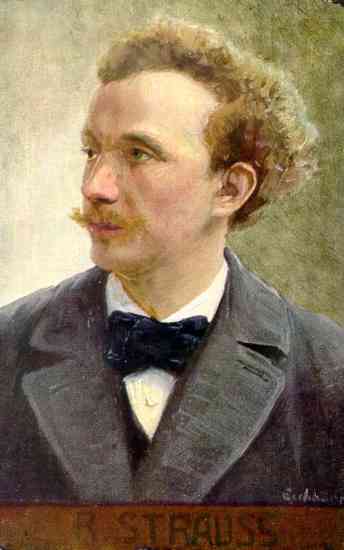
Written by the young Strauss for his father, a virtuoso horn player, this concerto is one of the best-known and beloved in the French Horn solo repertoire. While not as musically complex as other Strauss compositions, it contains unmistakable harmonic and musical elements which instantly mark it as Strauss’ work.
Although formally divided into three movements, it is played as a continuous work with no interruption between movements. The first and last movements’ themes are based on a heroic horn arpeggio, picked up in each instance by the orchestra and leading to a quieter, more subdued horn melody. The orchestral texture is varied, ranging from a Germanic “full orchestra” sound to chamber music-like effects (e.g., solo horn accompanied by upper woodwinds and solo ‘celli). The middle Andante is harmonically the most interesting, with unusual key shifts between A-flat minor and E major supporting dramatic expositions of lyrical horn melody.
Although compact, this concerto explores the full horn range, is challenging for the orchestra, and enjoys a large popular following.
Here’s Barry Tuckwell in a performance with the NHK Symphony Orchestra in 1987. Movement 1:
Victor Hugo wrote the play “Le Roi S’Amuse” (The King Amuses Himself) in 1832. Loosely based on historical figures, the plot involves a court jester to the king who schemes to help the king obtain a new mistress. The jester’s daughter is seduced by the king; upon discovering a plot to murder the king, she sacrifices her life for him. The play was banned in 1832 after just one performance (government censors believed that the play insulted the current king of France). Some 20 years later, the plot of “Le Roi S’Amuse” became the basis for Verdi’s Opera Rigoletto.
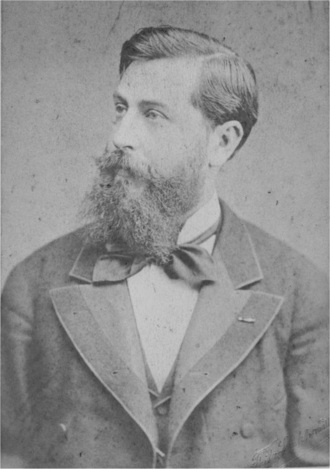
When the play was finally revived in 1882, the noted composer Léo Delibes wrote a ballet sequence of six charming dances and antique airs to be included as incidental music. They consist of a grand opening Gaillarde; a stately Pavane; a melodic Scène du Bouquet; Lesquercarde, a spritely tune; a sweet Madrigal; a wistful Passepied; and a final reprise of the Gaillarde.
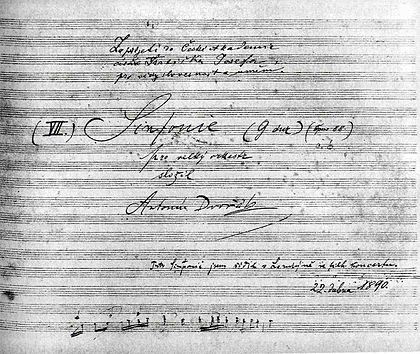
This symphony was composed by Dvorak in a short span of several months in 1889. A sunny, cheerful work, it alternates major and minor keys in each of its four movements.
Dvorak wrote this work in a new style, transitioning from traditional symphonic structure (exposition-development-recapitulation) towards a more poetic musical structure, stitching together many melodic and thematic fragments (particularly evident in the first movement).
The symphony opens with a wistful theme in G minor by ‘celli, clarinets, bassoon and horn. The violins lead an energetic transition to G Major; a clarinet theme in minor keys is interspersed several times in the movement, which ends on an optimistic note.
The second movement is more introspective. Beginning softly in the strings, upper winds join in to combine in a duet. Singing passages in C Major, first in the winds and then in the strings, lead to rousing climaxes featuring brass and timpani.
The third movement is a graceful waltz, bracketed by a folk-melody trio and a sudden vivace at the end. A rousing trumpet flourish starts off the last movement. A series of string variations feature ‘celli and violas, abruptly followed by a rousing orchestral Allegro. Midway through the movement, Dvorak gives the winds a contrasting restless theme in C minor. The “theme and variations” return in the strings and woodwinds; the main Allegro theme then reappears. Led by surging horns, trumpets and trombones, the symphony accelerates to a triumphant close.