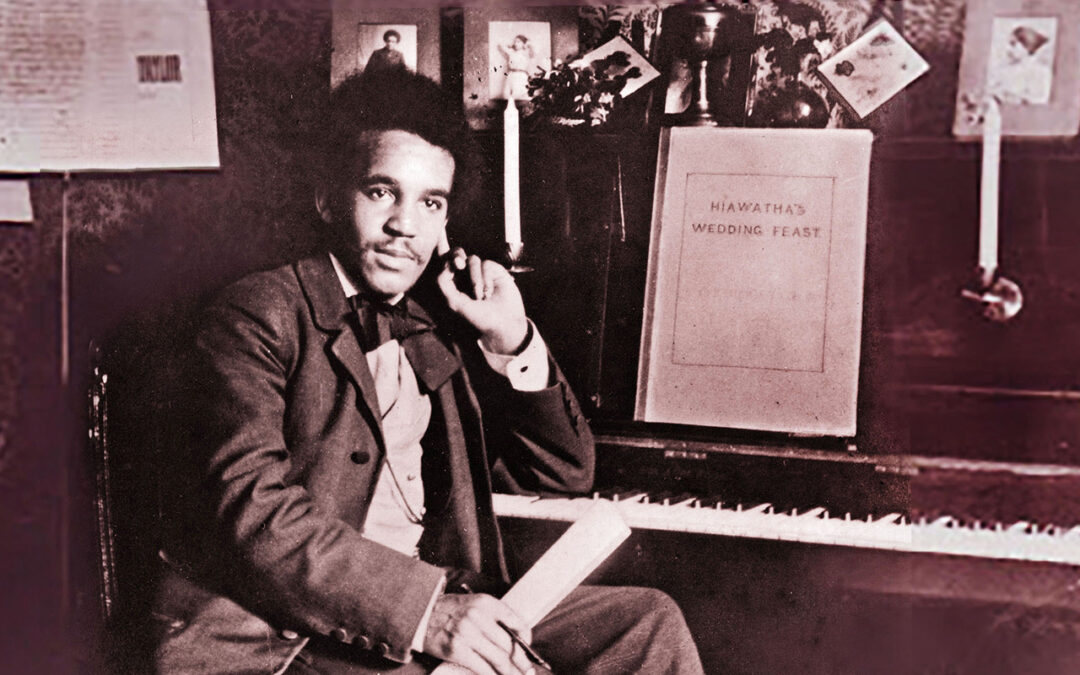
Samuel Coleridge-Taylor (15 August 1875 – 1 September 1912) was a well-known British composer at the turn of the last century. The son of an Englishwoman and a father from Sierra Leone, he started violin lessons at age five, and quickly established himself as a composer and conductor.
He was particularly known for his three cantatas on the epic 1855 poem The Song of Hiawatha by the American poet Henry Wadsworth Longfellow.
In 1898 Coleridge-Taylor composed the “African Suite” for solo piano after meeting with the African-American poet Paul Dunbar, who encouraged him to explore his African heritage. Coleridge-Taylor arranged the last movement (“Danse Nègre”) for full orchestra, and it has since become a well-known showpiece. It features lively dance rhythms framed in a Victorian musical idiom, with contrasting lyrical sections featuring a late-romantic sensibility.
Danse Nègre
Op. 35 No.4
Composed in 1898-1904
By Samuel Coleridge-Taylor