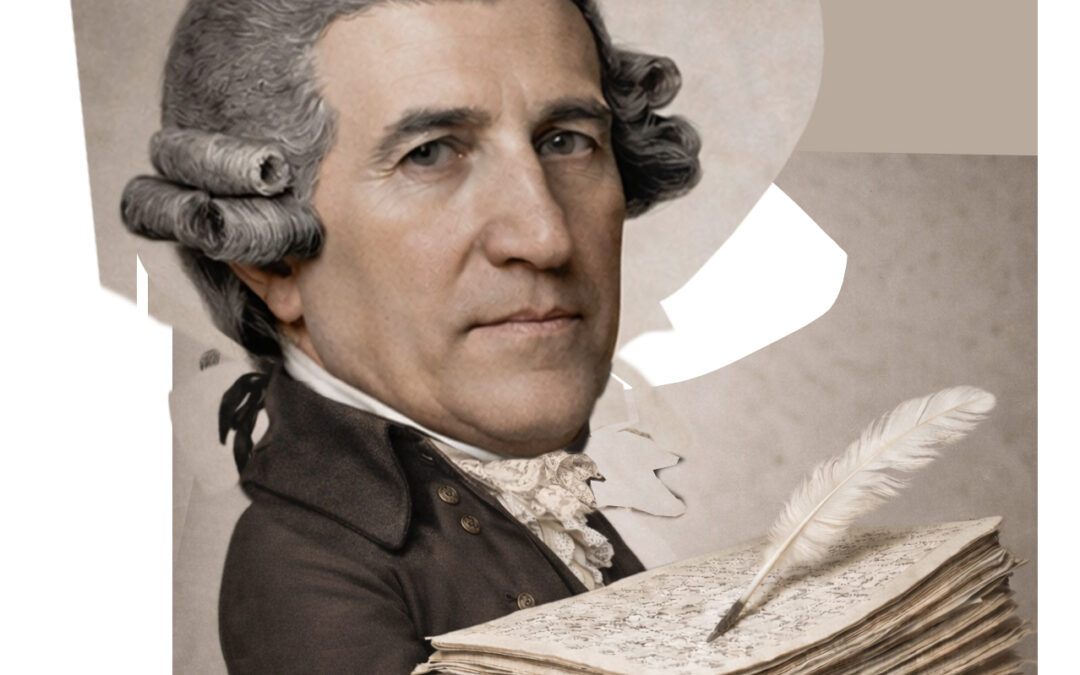
Josef Haydn, “Father of the Symphony” composed Symphony 99 in Vienna in 1793 for his return to London, and conducted the first performance at the King’s Theatre on February 19, 1794, when he was in his sixties. Previously, Haydn had been in service of the wealthy Esterházy family at their palace in rural Hungary, where he wrote, “I was cut off from the world. There was no one to confuse or torment me, and I was forced to become original.”
In 1790, Haydn was recruited by Johann Peter Salomon, a London-based German violinist and impresario, who happened to be in the area when Haydn’s employer, Prince Nicholas Esterházy, had passed; Esterházy’s son dismissed Haydn from his post. Salomon arrived, announcing “I am Salomon and I have come from London to fetch you” and made the composer an irresistible offer: £1,000 for an opera, six symphonies, and some miscellaneous pieces, plus £200 for a benefit concert. Haydn bade farewell to his friend Mozart (who he would never see again), and headed for England. He stayed for a year and a half, went to Vienna, and then returned to London in 1794.
The magnificent Symphony 99 is the first in this second group of “London Symphonies,” Haydn’s final symphonies (totaling 104!). No longer confined to the parlors of Esterházy, Haydn had the grandest stages of London at his disposal and an adoring fan base to fill the halls; he could be bold, expansive, and creative. Haydn embraces a lusher sound, including clarinets for the first time – likely Mozart’s posthumous influence on Haydn. The symphony is notable for its several woodwind-only passages, specifically in the hymn-like second movement. Haydn wrote for attentive, quick-witted listeners who deeply knew the symphonic form, and could identify when Haydn’s musical choices were subverting expectations, when he invented a new harmony, went to “foreign” keys, or used new scoring for a phrase when it was repeated again. He delighted in playing with the very building blocks of music itself to invent, joke, and comment. His music is a surprise and delight better heard than read about.
Symphony No. 99
In Eb Major, Hob. I/99
Composed in 1793
By Franz Joseph Haydn