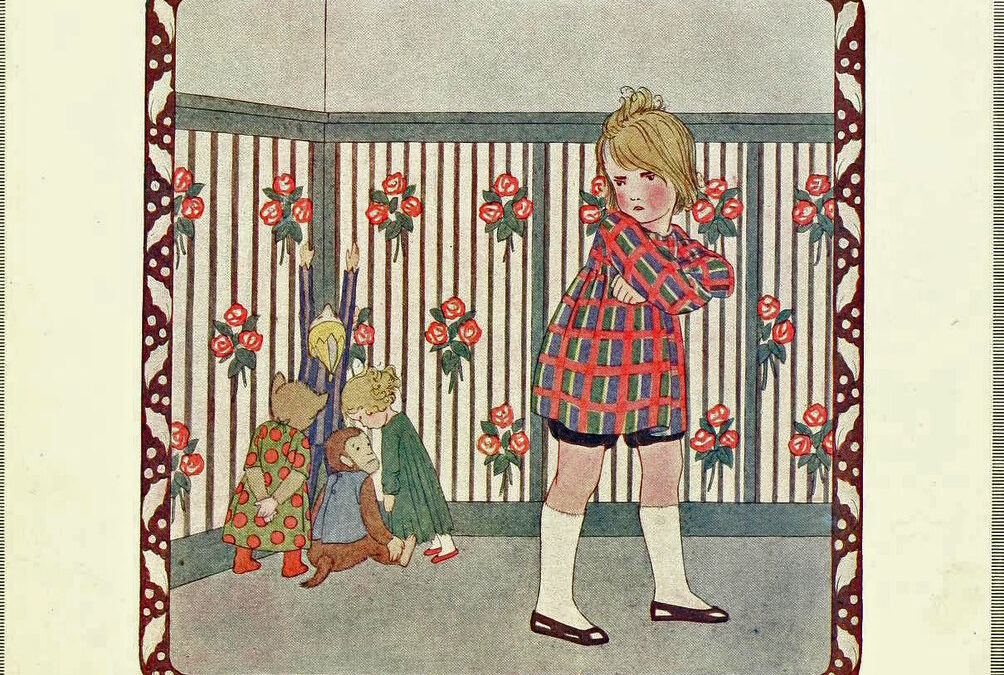
Claude Debussy composed the Children’s Corner suite between 1906 and 1908. He dedicated the suite to his daughter, Claude-Emma (known as “Chou-Chou”), who was born on October 30, 1905, in Paris. She is described as a lively and friendly child who was adored by her father.
She was three years old when he dedicated the suite to her in 1908. The dedication reads: “A ma chère petite Chouchou, avec les tendres excuses de son Père pour ce qui va suivre. C. D.” (To my dear little Chouchou, with tender apologies from her father for what follows).
Claude-Emma died in 1919 at only 13 years old, just a year after her father. The suite was published by Durand in 1908, and was given its world premiere in Paris by Harold Bauer on December 18 of that year. In 1911, an orchestration of the work by Debussy’s friend André Caplet received its premiere. The suite is in six movements, each with an English-language title.
Doctor Gradus ad Parnassum is a knowing reference used for many centuries for instructional books and music, literally translated as “steps to Parnassus.” It nods to the tedium of scale practice, transforming the mundane to his characteristic washes of sound and grand gestures.
In Jimbo’s Lullaby, a child’s stuffed elephant is lovingly brought to life, presumably mis-named after P. T. Barnum’s magnificent mammal Jumbo. The opening melody lumbers in the lower basses, representing our happy elephant.
Serenade for the Doll depicts the conversations of a Chinese porcelain doll, and of course, what musical element is more appropriate (clichéd?) than to use the five-note musical scale and frequent intervals of a fourth?
In The Snow Is Dancing, Debussy paints an icy landscape with shivering strings and floating winds.
Classical music fans will hear nods to Debussy’s Afternoon of a Faun in The Little Shepherd, with an oboe leading the pastoral descent.
Golliwogg’s Cakewalk is the most famous and lively of the movements, and is emblematic of French society’s enthrallment with the new sound of jazz, which was emerging in the United States at that time. The cakewalk was a dance that was a mainstay of American minstrel shows, and characterized by syncopations and vigorous, strutting rhythm. “Golliwogg” was a black, stuffed doll, dressed in stereotypical minstrel show garb, and completely en vogue at the time; Chouchou may have owned one.
Debussy’s nod to jazz bookends a satirical reference to Wagner’s Prelude to Tristan und Isolde, barely masking the composer’s contempt for the German master.
Children's Corner
L. 113
Composed in 1908
By Claude Debussy
Arranged by André Caplet